Unit Dose Ophthalmic Manufacturing: Supporting Safe, Precise Eye Care
Ophthalmic medicines are applied directly to one of the body’s most sensitive organs, making sterility, dosing accuracy and packaging integrity essential. Unit-dose systems provide an individual container with a defined quantity of an ophthalmic formulation, helping reduce repeated handling and supporting controlled administration. For pharmaceutical companies developing or expanding eye-care portfolios, choosing a reliable Unit Dose Ophthalmic Manufacturer in India can be an important step toward consistent quality and scalable production.
Unit-dose manufacturing brings together formulation expertise, controlled environments, precision filling, container selection, sealing and quality assurance. The approach must be matched to the formulation, fill volume, packaging requirements and intended market. A capable manufacturing partner can coordinate these elements so the finished product remains consistent throughout its defined shelf life.
What Are Unit Dose Ophthalmic Products?
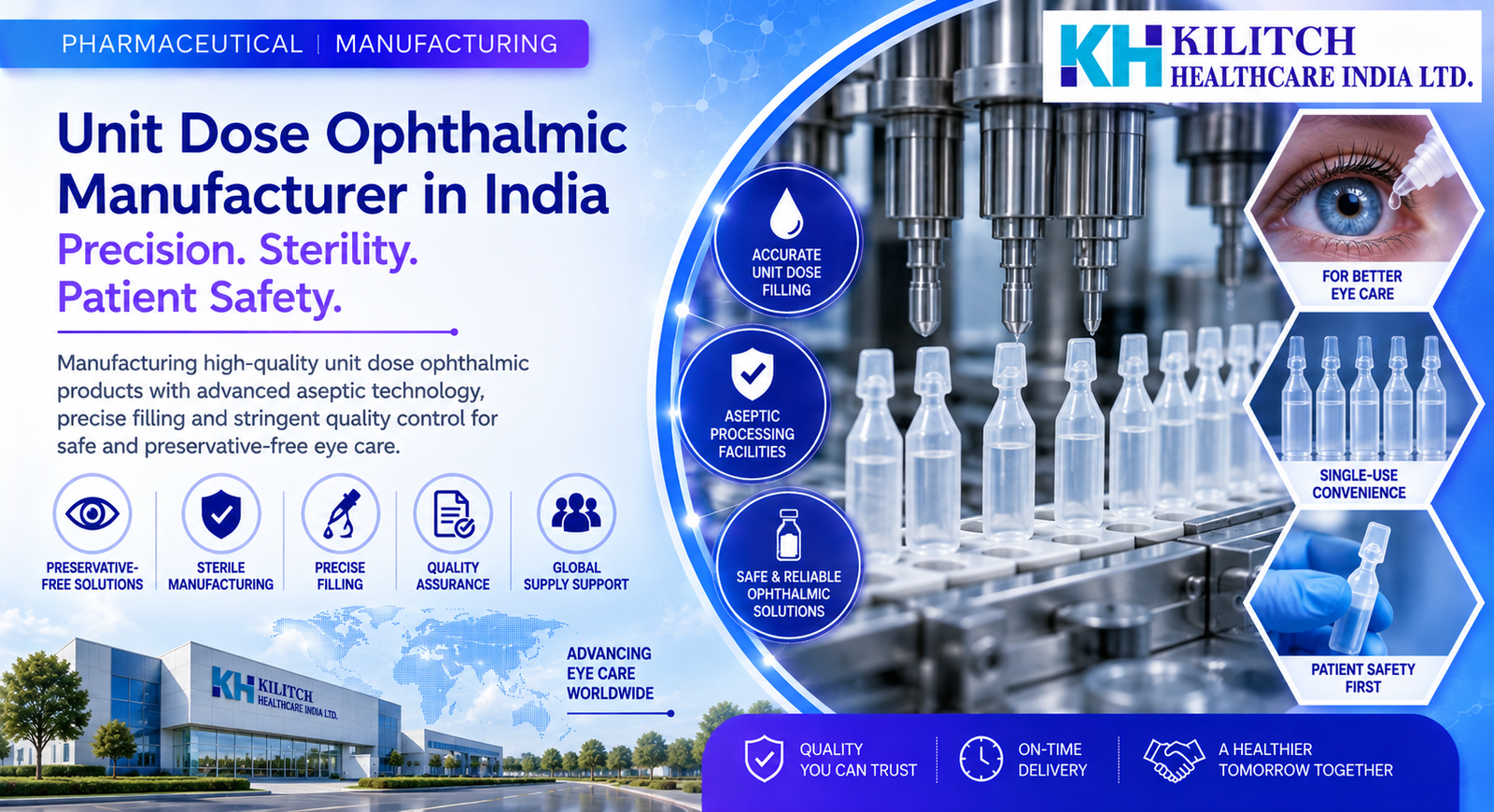
Unit-dose ophthalmic products are supplied in individual containers intended to deliver a defined quantity of an eye-care formulation. Depending on the product and approved presentation, these may include single-use containers for suitable ophthalmic solutions and other preparations.
The format can be especially relevant when preservative-free delivery is required or when minimizing repeated opening and handling is important. Unlike a conventional multi-dose bottle, an individual unit is designed around a single-use presentation, which can support convenience for patients and healthcare professionals.
Unit-dose packaging is not simply a smaller version of a multi-dose bottle. Formulation characteristics, container material, filling method, closure system and packaging configuration must work together. Components also need to be compatible with the formulation and capable of protecting product quality during storage and distribution.
Key Stages of Unit Dose Ophthalmic Manufacturing
Producing a dependable unit-dose ophthalmic product requires a unit-dose ophthalmic production process. Each stage contributes to product quality, sterility and reliable performance.
Formulation and Raw Material Control
The process begins with qualified raw materials and a formulation developed against defined specifications. Parameters such as concentration, pH, osmolarity, viscosity and compatibility with the selected container system may need evaluation. Raw materials are verified before use, while controlled preparation supports batch-to-batch consistency.
Aseptic Preparation and Processing
Where aseptic manufacture is required, preparation and processing take place in controlled environments designed to minimize microbial and particulate contamination. Sterile filtration may be used where appropriate, and equipment, components and processing steps are managed through established procedures.
Precision Filling
Unit-dose containers require accurate and repeatable filling because each individual unit represents a defined quantity. Precision filling equipment and suitable process controls help maintain consistent fill volumes. In-process monitoring can identify deviations before they affect the wider batch.
Sealing and Packaging
After filling, individual units are sealed to protect the contents from external contamination. Packaging selection is therefore part of the product strategy. The finished presentation should be practical to handle while maintaining required protection during storage, transport and use.
Inspection and Quality Control
Quality activities help confirm that the finished product meets established specifications. Depending on the formulation and applicable requirements, testing may include sterility, particulate assessment, fill-volume verification, pH, stability and container-closure integrity evaluation. Batch records provide traceability from incoming materials through final release.
Why Unit-Dose Packaging Matters in Ophthalmic Care
Packaging has a direct role in protecting ophthalmic products because the formulation is exposed to the environment during administration. A well-designed unit-dose system can limit repeated opening, reduce unnecessary handling and provide a clearly defined quantity for use.
For preservative-free formulations, unit-dose packaging can be a useful presentation because it does not depend on preservatives to protect a product after repeated opening. The container system therefore becomes an important part of the overall product design and must be considered alongside sterility, compatibility, usability and stability.
Unit-dose presentations may also support differentiated product positioning in hospitals, clinics, surgical settings and other healthcare environments where individual formats are useful. The appropriate presentation should always be determined by the product’s formulation, intended use and applicable regulatory requirements.
Important Quality Considerations for Unit Dose Ophthalmics
Sterility Assurance
Sterility is fundamental to ophthalmic manufacturing. Controlled environments, personnel practices, equipment and process controls must work together to minimize contamination risks. Sterilization or aseptic processing strategies should be established according to product requirements.
Container Compatibility
The container must be suitable for the formulation and should not adversely affect product quality. Material selection, interaction with the formulation and protection during storage are important development considerations.
Dose and Fill Accuracy
A unit-dose product should provide a consistent quantity. Filling systems therefore require suitable controls, calibration and monitoring to maintain repeatability across production.
Packaging Integrity
The seal and container system should protect the product throughout its shelf life and distribution. Inspection and integrity testing can help identify defects that may compromise product protection.
Documentation and Traceability
Robust records support quality oversight. Raw material records, manufacturing documentation, in-process checks, test results and release records should be maintained within the applicable quality system.
How to Choose a Unit Dose Ophthalmic Manufacturer in India
Selecting a manufacturing partner requires more than checking production capacity. Pharmaceutical companies should evaluate ophthalmic infrastructure, quality systems, technical expertise and experience with sterile products.
Important areas include controlled manufacturing environments, aseptic filling capabilities, ophthalmic formulation expertise, packaging and inspection systems, quality control laboratories, stability support and documentation practices. It is also useful to understand the manufacturer’s approach to technology transfer, scale-up, batch planning and commercial supply.
A strong partner should be able to address the complete product lifecycle rather than only the filling operation. Clear communication around specifications, responsibilities, timelines, quality agreements and regulatory expectations can make the manufacturing relationship more predictable and efficient.
Unit Dose Ophthalmic Manufacturing at Kilitch Healthcare
Kilitch Healthcare has an established focus on ophthalmic and sterile pharmaceutical manufacturing through its Eyekare Division. The company’s published ophthalmic capabilities include controlled manufacturing environments, aseptic processing, sterile filtration, specialized filling and quality control systems. Its sterile ophthalmic manufacturing information also identifies unit-dose vials among the container formats used for ophthalmic filling. This supports an integrated approach to ophthalmic unit-dose manufacturing.
Kilitch also highlights technologies designed around preservative-free delivery and specialized ophthalmic packaging. Its published capabilities include multi-dose preservative-free systems, precision metered-dose delivery and other sterile packaging innovations. These solutions are relevant for companies seeking differentiated ophthalmic presentations while maintaining attention to product quality and patient safety.
For businesses evaluating a unit-dose eye-care product, an experienced partner can help align formulation requirements, container selection, filling, packaging, testing and supply planning. Kilitch Healthcare combines ophthalmic expertise, manufacturing infrastructure and quality-focused processes to support such projects from development through commercial production.
Conclusion
Unit-dose ophthalmic products combine precise dosing with an individual packaging format designed to support safe and convenient eye care. Their successful manufacture depends on much more than filling small containers: formulation compatibility, sterile processing, accurate dosing, packaging integrity, inspection, testing and documentation must operate as one controlled system.
For pharmaceutical companies, an experienced manufacturer can simplify the path from product requirements to dependable commercial production. Kilitch Healthcare brings ophthalmic expertise, specialized infrastructure and quality-focused processes to projects requiring reliable sterile ophthalmic production.
If you are evaluating a unit-dose eye-care product, developing a new ophthalmic presentation or looking for a dependable ophthalmic manufacturing partner in India, Kilitch Healthcare can support the manufacturing journey with capabilities aligned to product quality, consistency and patient-focused delivery.