Introduction: Why Unit Dose Eye Drops Matter
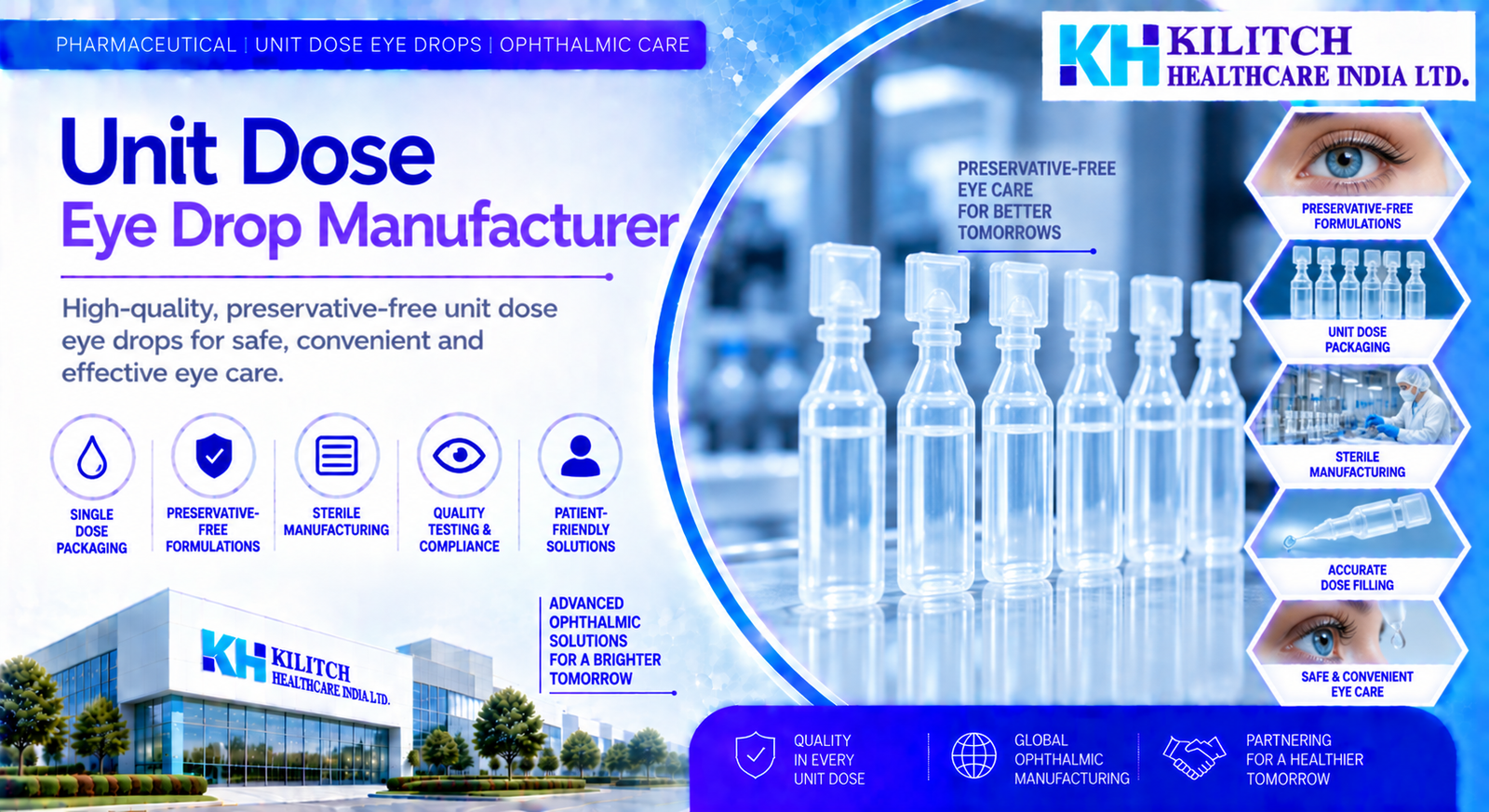
Unit dose eye drops are ophthalmic products packaged as individual doses intended for single-use administration. This format can help reduce repeated exposure of the formulation to the surrounding environment and can be particularly relevant for products where preservative-free or single-use delivery is preferred. Developing these products requires coordination between formulation, sterile manufacturing, filling, packaging and quality control. Kilitch Healthcare operates in specialized ophthalmic manufacturing, making an integrated approach important when evaluating unit dose eye drop production.
What Are Unit Dose Eye Drops?
Unit dose eye drops are ophthalmic formulations supplied in individual containers or delivery units, with each unit designed to provide a defined quantity for one administration or treatment occasion. Unlike multidose bottles, the individual-dose format changes how the product is packaged, handled and administered.
The product therefore needs to be considered as a complete system rather than as a formulation alone. Drug concentration, fill volume, container material, closure or dispensing configuration, sterility, stability and user handling can all influence the finished product. The manufacturing process must maintain these characteristics consistently from batch preparation through final packaging.
Advantages of Unit Dose Eye Drop Packaging
Single-Use Format
A single-use container is opened for an individual administration rather than being repeatedly accessed over an extended period. This can be useful where a product is designed around single-dose use and where minimizing repeated handling is an important product consideration.
Support for Preservative-Free Formulations
Unit dose packaging can be particularly relevant for preservative-free ophthalmic formulations because the product does not need to rely on repeated opening of a multidose container. The suitability of a preservative-free approach depends on the formulation, packaging system, intended use and applicable product requirements.
Convenient Patient Handling
Individual-dose packaging can provide a compact and practical format for administration and transport. The final container should be designed so that the intended dose can be delivered without compromising product integrity during normal handling.
Key Considerations for a Unit Dose Eye Drop Manufacturer
Formulation Compatibility
The formulation must remain compatible with the selected unit dose container throughout its intended shelf life. Drug stability, excipient compatibility, pH, viscosity and other product characteristics can influence packaging selection and manufacturing requirements.
Container Material
The container is part of the product protection system. Material selection should consider compatibility with the formulation, resistance to relevant environmental factors and suitability for the intended filling and sealing process. Extractables, leachables and other packaging-related considerations may also be evaluated according to the product.
Dose and Fill Accuracy
Because each unit is intended to provide a defined amount of product, filling accuracy is an important manufacturing consideration. Equipment and process controls should support consistent fill volumes and minimize variation between individual units.
Unit Dose Eye Drop Manufacturing Process
1. Formulation Preparation
Manufacturing begins with controlled preparation of the ophthalmic formulation. Active ingredients and excipients are handled according to established specifications and procedures. Parameters such as mixing, temperature, concentration and processing sequence are controlled according to the product’s requirements.
2. Sterile Processing
Ophthalmic products require stringent contamination control because they are administered to the eye. Depending on the formulation and process design, suitable sterilization or sterile processing strategies are established. Environmental controls, equipment controls and validated procedures support the required manufacturing conditions.
3. Unit Dose Filling
The prepared formulation is filled into the selected single-dose containers using controlled equipment. Fill volume, filling speed, equipment performance and component handling can affect consistency. The process should be designed to maintain product quality while supporting repeatable filling across the batch.
4. Sealing and Container Closure
After filling, individual units are sealed or closed using the specified packaging configuration. The closure needs to protect the formulation during storage and handling while maintaining the intended product integrity. Container-closure performance is therefore considered as part of the overall product design.
5. Inspection, Packaging, and Release
Finished units undergo appropriate inspection and quality evaluation before release. Packaging operations provide protection and ensure that relevant product information accompanies the finished units. Batch documentation and quality records support traceability throughout the release process.
Quality Control for Unit Dose Ophthalmic Products
Sterility and Microbial Control
Sterility is a fundamental quality consideration for ophthalmic products. Manufacturing controls, environmental monitoring and appropriate testing work together to support the required level of sterility assurance. The exact controls and testing programme depend on the formulation and manufacturing process.
Assay and Product Uniformity
Analytical testing helps confirm that the finished product meets defined specifications for active ingredient content and other relevant quality attributes. Consistency between individual units is particularly important for a single-dose format because each container represents a defined administration.
Stability and Packaging Performance
Stability studies evaluate how the product behaves over its proposed storage period. Testing may consider drug content, degradation, appearance, container compatibility and other product-specific attributes. The packaging system should continue to provide appropriate protection throughout the intended shelf life.
Why Packaging and Manufacturing Must Be Developed Together
Unit dose eye drops demonstrate why pharmaceutical formulation and packaging cannot always be treated as separate activities. The formulation determines many product requirements, while the container and delivery format influence stability, handling, filling and administration. Early coordination can help identify compatibility or manufacturing challenges before commercial production.
An integrated ophthalmic manufacturing approach can connect formulation development, sterile processing, filling, packaging and quality activities. This can be valuable when a unit dose product moves from development into routine commercial manufacturing.
How to Evaluate a Unit Dose Eye Drop Manufacturer
Companies evaluating a manufacturing partner should consider experience with ophthalmic formulations, sterile production environments, unit dose filling, packaging compatibility, analytical testing and quality systems. Manufacturing capacity alone does not establish whether a partner is suitable for a particular unit dose product.
It is also useful to review whether the manufacturer can support the product across development and commercial supply. Businesses evaluating ophthalmic manufacturing capabilities can consider formulation expertise, filling infrastructure, quality controls and packaging experience alongside production capacity.
Unit Dose Ophthalmic Manufacturing at Kilitch Healthcare
Kilitch Healthcare works across specialized pharmaceutical categories, including ophthalmic formulations, sterile injectables, nasal formulations and prefilled delivery systems. Its broader manufacturing and development environment allows product-specific requirements to be considered across formulation, production, quality and packaging activities.
For a unit dose eye drop product, the specific manufacturing strategy depends on the formulation, container system, intended dose, sterility requirements and applicable quality specifications. A coordinated approach helps ensure that these factors are considered together as the product progresses toward commercial manufacturing.
Conclusion: Building Reliable Unit Dose Eye Drops
A unit dose eye drop manufacturer must manage more than filling an ophthalmic formulation into small containers. Successful production requires attention to formulation compatibility, sterile processing, fill accuracy, container-closure integrity, packaging, stability and finished-product quality. Kilitch Healthcare provides specialized pharmaceutical manufacturing capabilities that include ophthalmic formulations, supporting businesses evaluating the development and production requirements of unit dose eye drop products.