Understanding Pharmaceutical Facility Design
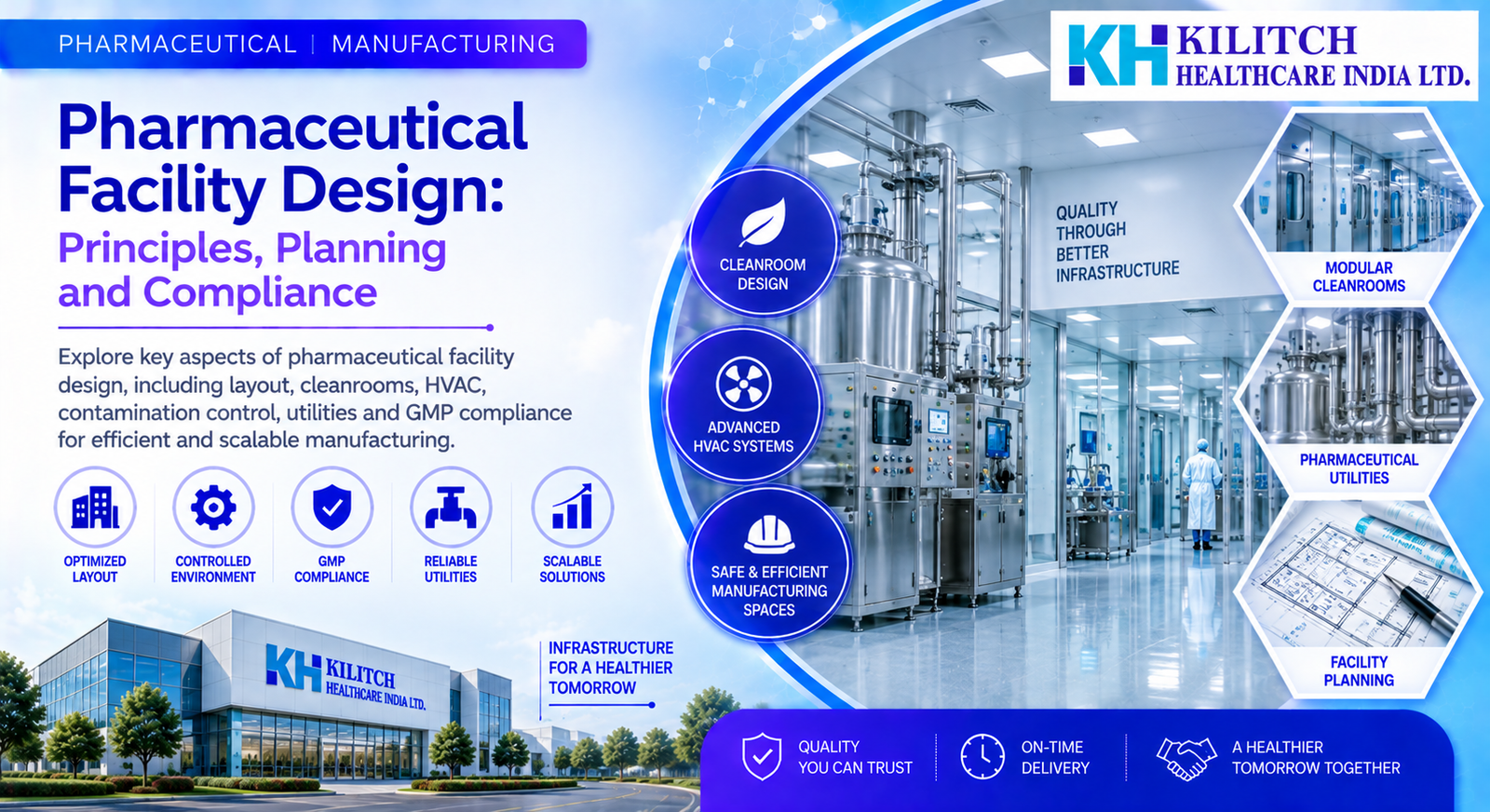
Pharmaceutical Facility Design is the process of planning a manufacturing environment around product requirements, process flow, quality systems, personnel movement, material handling, utilities, environmental controls, and applicable regulatory expectations. A well-planned facility should support reliable production while making cleaning, maintenance, monitoring, qualification, and future modifications practical.
For pharmaceutical companies, facility planning begins with understanding what will be manufactured and how it will be manufactured. Dosage form, production scale, equipment, raw materials, sterility requirements, packaging operations, storage conditions, and target markets can all influence the final layout. Early coordination between engineering, manufacturing, quality, validation, and regulatory teams helps ensure that infrastructure decisions support the intended operation.
Organizations evaluating a new or expanded pharmaceutical manufacturing facility should consider the capabilities of potential manufacturing partners and their approach to controlled pharmaceutical production.
Key Objectives of Pharmaceutical Facility Planning
The primary objective of facility planning is to create a controlled environment that supports product quality and efficient operations. A facility should provide appropriate segregation, logical process flows, adequate utilities, controlled environmental conditions, and suitable areas for production and support functions.
Design decisions should consider people and materials. Unnecessary movement can increase operational complexity and create additional contamination-control challenges. Clearly defined routes and appropriately positioned rooms can help personnel and materials move efficiently through the facility.
Facility Layout and Process Flow
A pharmaceutical plant layout should reflect the sequence of manufacturing activities. Areas for receiving, quarantine, dispensing, preparation, processing, filling, packaging, storage, and quality functions should be arranged according to the product and process requirements.
Logical zoning can help separate activities with different environmental or operational requirements. Supporting spaces such as change rooms, airlocks, equipment preparation areas, waste handling points, and service corridors should be considered alongside production rooms rather than added later.
Equipment placement should allow sufficient space for operation, cleaning, inspection, maintenance, and safe personnel access. The layout should avoid unnecessary obstructions that could interfere with cleaning or environmental control.
Cleanroom Design and Environmental Control
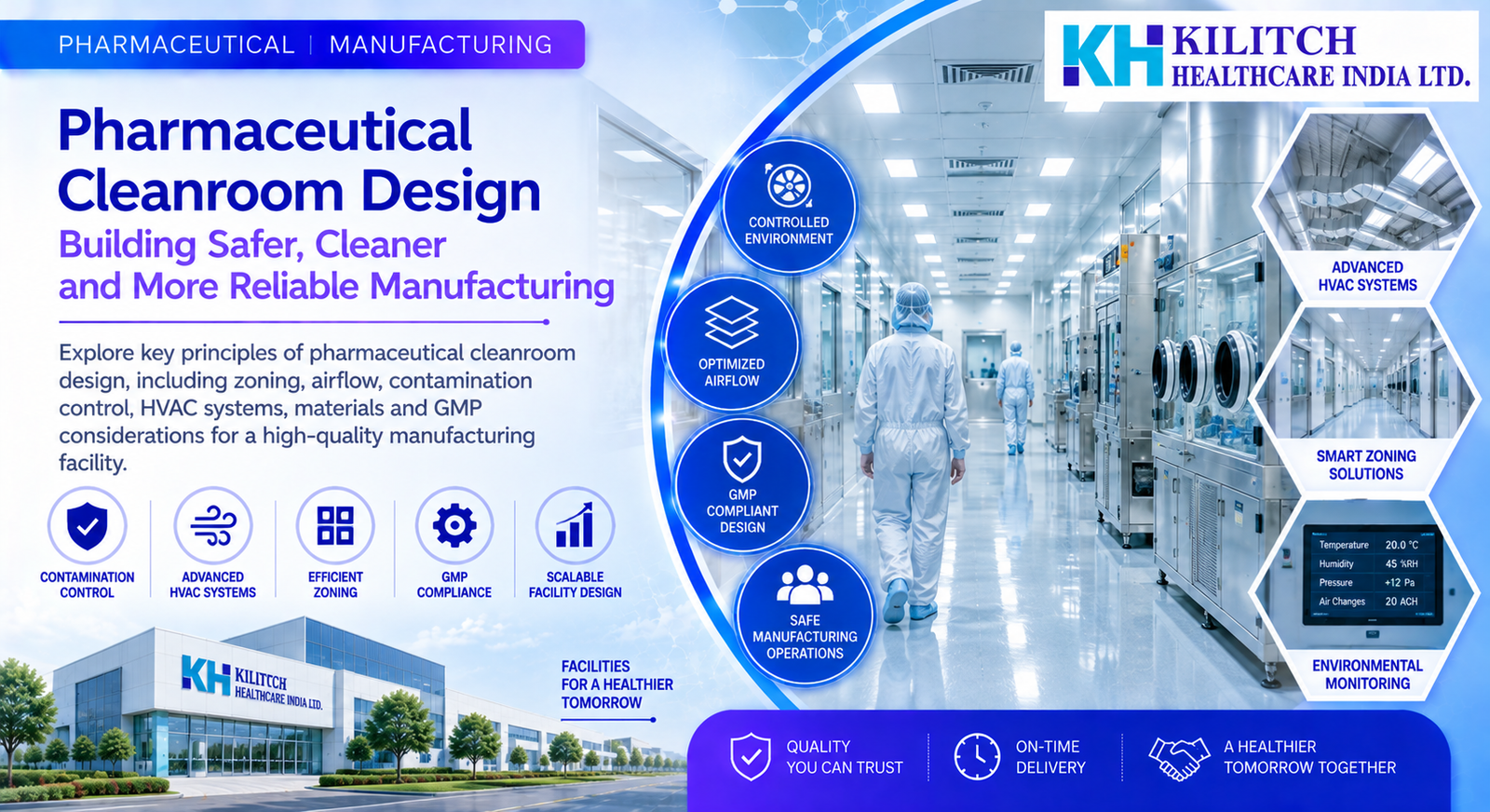
For products requiring controlled environments, cleanroom design is a central component of the facility. Room classifications should be established according to the manufacturing process and applicable requirements rather than applying identical conditions throughout the entire building.
Cleanroom surfaces, doors, ceilings, floors, fixtures, and penetrations should be selected and detailed to support effective cleaning and maintenance. Areas where dust or contaminants could accumulate should be minimized through appropriate architectural design.
Environmental monitoring can provide information about whether defined conditions remain within established limits. Depending on the operation, monitoring may include particles, microorganisms, temperature, humidity, pressure differentials, and other relevant parameters.
HVAC and Pharmaceutical Utilities
Pharmaceutical HVAC systems are essential for controlling air supply, filtration, temperature, humidity, pressure, and airflow. HVAC capacity and configuration should be developed according to room classification, process requirements, heat loads, occupancy, equipment, and contamination-control objectives.
Utilities are equally important to facility performance. Depending on the manufacturing process, a facility may require systems for purified water, compressed air, gases, steam, electricity, drainage, environmental controls, and other services. Utility systems should be appropriately designed, monitored, maintained, and qualified.
Critical utilities should be planned with reliability and maintainability in mind. Access for servicing should be possible without unnecessarily disrupting production or compromising controlled areas.
GMP Facility Design and Contamination Control
GMP facility design should support documented procedures, controlled operations, hygiene, cleaning, maintenance, traceability, and quality oversight. The facility should make it practical for personnel to follow established procedures consistently.
Contamination control should be incorporated from the design stage. Potential sources include personnel, raw materials, equipment, air movement, waste, cleaning activities, and maintenance work. Segregation, pressure relationships, controlled access, appropriate material flow, and cleaning-friendly surfaces can contribute to an overall contamination-control strategy.
For sterile operations, the facility may require additional controls around personnel gowning, material transfer, environmental monitoring, aseptic processing, and critical areas. The design should be developed together with the specific sterile manufacturing process.
Personnel and Material Movement
Personnel movement is an important consideration because people can introduce particles and microorganisms into controlled areas. Changing rooms, gowning areas, personnel airlocks, and access controls should be positioned according to the cleanliness requirements of each area.
Material movement should follow defined pathways. Material airlocks, pass-through systems, staging areas, and controlled transfer procedures can help reduce unnecessary movement through critical production spaces.
Where practical, personnel and material routes should be designed to minimize crossover and support a clear operational sequence. This can improve workflow while reinforcing the facility’s contamination-control strategy.
Equipment, Maintenance and Cleanability
Equipment should be selected and positioned with both production and maintenance in mind. Operators need adequate access for routine activities, while maintenance teams require safe access to components, utilities, and service points.
Cleanability should be considered during equipment and room design. Gaps, inaccessible surfaces, poorly positioned utilities, and difficult-to-reach areas can make routine cleaning more complicated. Designing these features appropriately from the beginning can support consistent sanitation practices.
Maintenance activities should be planned so that servicing does not unnecessarily disrupt controlled operations. Where required, equipment and utilities can be arranged to provide service access from suitable support areas.
Qualification, Validation and Documentation
A pharmaceutical facility must demonstrate that critical systems and environments operate according to approved requirements. Qualification activities may cover rooms, HVAC systems, utilities, equipment, environmental controls, and other critical infrastructure.
Documentation should support the facility throughout its lifecycle. Design specifications, drawings, equipment information, procedures, qualification records, calibration data, maintenance records, environmental monitoring results, and change-control documentation are important parts of a controlled quality system.
Changes to layouts, equipment, utilities, processes, or environmental conditions should be evaluated through appropriate change-control procedures. This helps determine whether additional qualification, validation, or regulatory assessment is required.
Scalability and Future Expansion
Pharmaceutical businesses may expand production volumes, introduce new products, or adopt different technologies over time. Facility design should therefore consider future requirements while maintaining appropriate segregation and environmental control.
Planning for sufficient utility capacity, equipment access, storage, HVAC requirements, and flexible support areas can make future expansion more manageable. However, flexibility should be balanced with the need to maintain controlled flows and avoid unnecessary complexity.
A scalable design can reduce the disruption associated with future changes and help the facility respond more efficiently to evolving commercial requirements.
Choosing the Right Facility Design Approach
Facility design is most effective when engineering decisions are closely connected to manufacturing and quality requirements. A multidisciplinary team can evaluate process flows, room classifications, equipment, utilities, personnel movement, material handling, cleaning, maintenance, and qualification requirements together.
For B2B pharmaceutical companies, early planning can help clarify capital requirements, production capacity, timelines, documentation, and operational responsibilities. Reviewing these factors before construction or major modification can help reduce avoidable changes later.
An experienced partner can provide useful perspective on pharmaceutical facility design, particularly when facility infrastructure must support specialized pharmaceutical production.
Conclusion
Pharmaceutical Facility Design requires an integrated approach to layout, process flow, cleanrooms, HVAC, utilities, contamination control, equipment placement, personnel movement, qualification, and ongoing facility management. The objective is not simply to create a compliant building, but to establish an environment that supports consistent and efficient pharmaceutical manufacturing.
For businesses planning a new facility, expanding existing capacity, or evaluating manufacturing infrastructure, early alignment between engineering, quality, manufacturing, and regulatory teams is essential. Companies can assess pharmaceutical manufacturing when evaluating manufacturing capabilities and potential long-term supply relationships.