Introduction: The Growing Role of Healthcare Manufacturing
Healthcare products support a wide range of medical and patient-care needs, from medicines and sterile products to specialized delivery formats and other healthcare applications. Behind these products is a manufacturing process that must balance technical precision, quality, regulatory requirements and dependable supply. A capable healthcare product manufacturer brings these disciplines together to turn validated formulations and product concepts into consistent finished products.
The role of a manufacturer can extend well beyond production. Depending on the product and business model, services may include formulation development, process optimization, technology transfer, scale-up, quality testing, packaging and commercial manufacturing. A capable healthcare product manufacturer can support several stages of this journey, helping businesses coordinate development and production while maintaining defined quality requirements.
Key Capabilities of a Healthcare Product Manufacturer
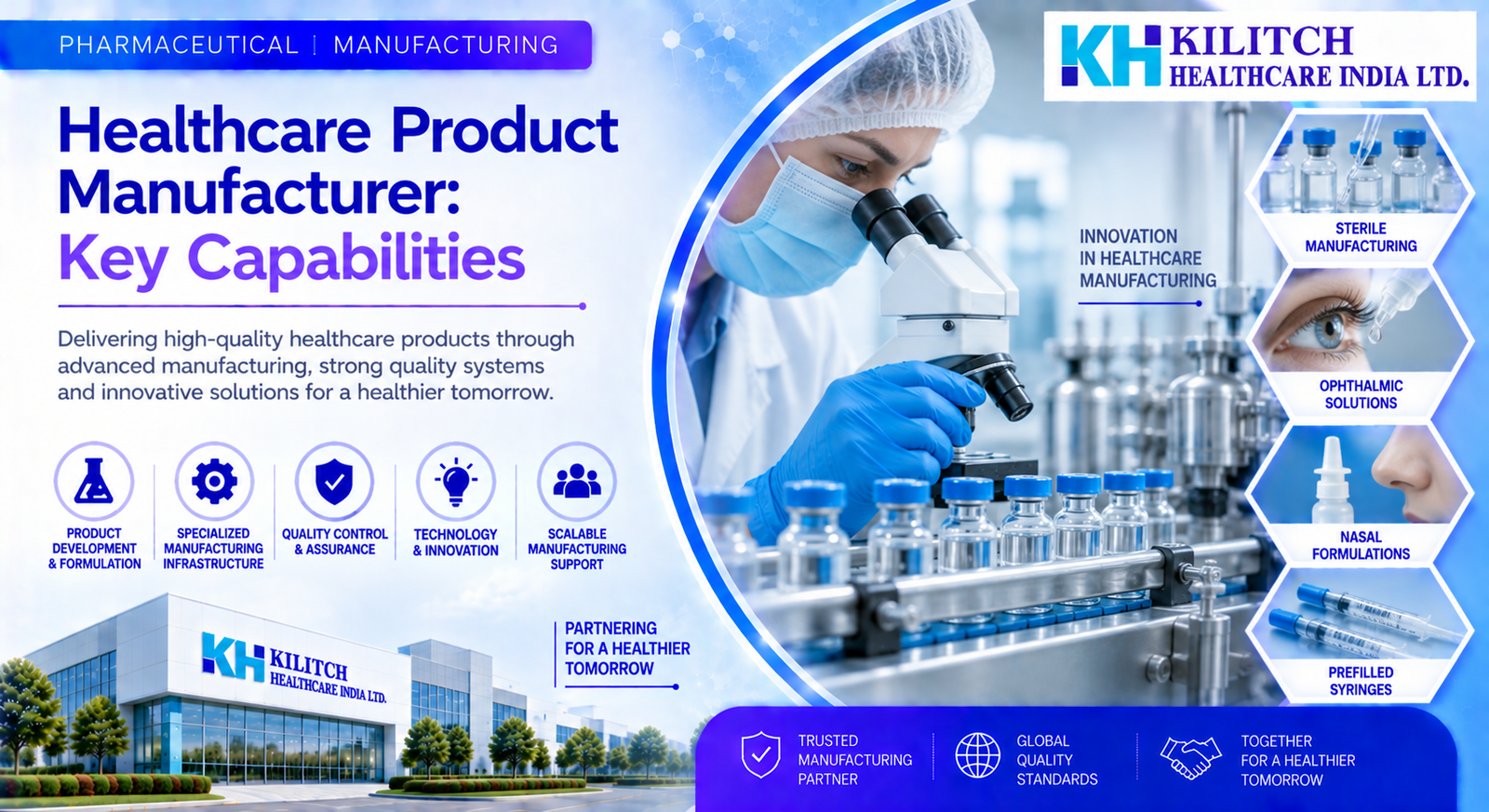
Product Development and Formulation
Product development is often the foundation of a successful manufacturing program. Manufacturers may work with formulations, dosage forms and delivery systems that require specific technical expertise. Development activities can include evaluating ingredients, optimizing processes, establishing manufacturing parameters and preparing a formulation for scale-up.
A strong development approach also considers how a product will behave during commercial manufacturing. Parameters established during development need to be translated into repeatable processes that can be controlled at a larger scale. This connection between development and manufacturing can help reduce variability and support a smoother transition into routine production.
Specialized Manufacturing Infrastructure
Different healthcare products require different production environments and technologies. Sterile products, for example, demand stringent environmental and process controls. Ophthalmic products, nasal formulations, injectables and prefilled delivery systems can also require specialized equipment, controlled handling and carefully designed manufacturing procedures.
Kilitch Healthcare works across specialized healthcare categories including sterile injectables, ophthalmic formulations, nasal formulations and prefilled syringes. Companies researching
For businesses researching Kilitch Drugs, it is useful to consider the manufacturing infrastructure, technical capabilities and product categories available rather than focusing only on individual products.
can therefore look beyond individual products and consider the manufacturing infrastructure, technical capabilities and product categories supported by the organization.
Quality Control and Assurance
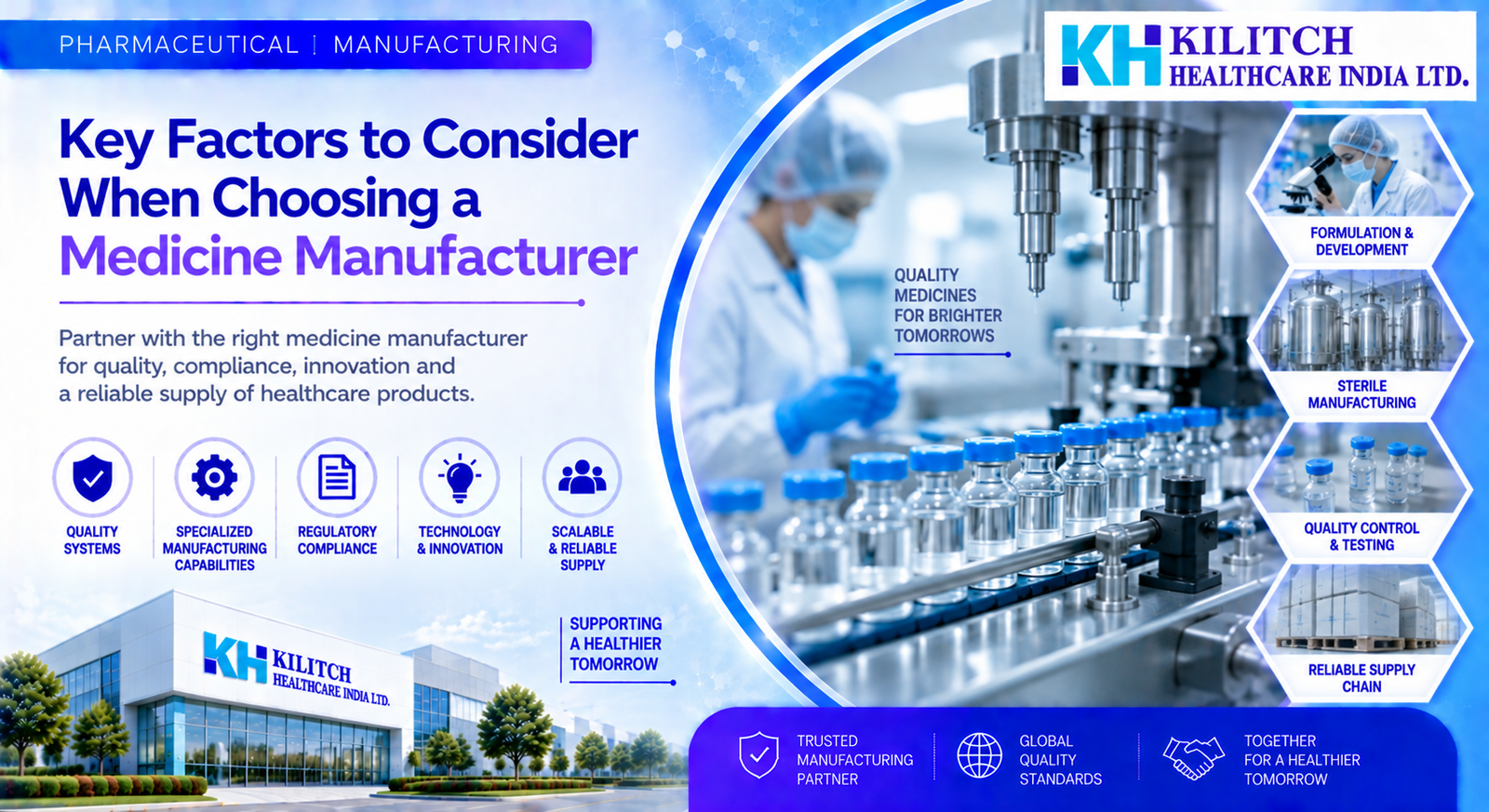
Quality is fundamental to healthcare manufacturing because finished products must meet defined specifications consistently. Quality control can involve testing raw materials, monitoring processes, evaluating finished products and maintaining records that demonstrate compliance with established requirements.
Quality assurance provides the wider system around these activities. It includes documented procedures, deviation management, change control, validation and other controls designed to keep manufacturing processes consistent. For companies selecting a partner, reviewing the manufacturer’s quality systems can be as important as reviewing its equipment and production capacity.
Technology and Innovation in Healthcare Product Manufacturing
Manufacturing technology continues to influence how healthcare products are developed, produced and delivered. Automation and modern equipment can improve process control, while specialized technologies can address particular product requirements. Innovation can also involve the interaction between formulation, container systems, filling processes and sterilization.
For specialized products, these capabilities may become particularly important. Businesses exploring Kilitch Drugs can evaluate how specialized technologies, controlled environments and product-development expertise may support different healthcare requirements.
Why Scalability Matters
A healthcare product may begin with development quantities before moving into larger commercial batches. A manufacturing partner should therefore be able to support a controlled transition from development to scale-up without compromising established quality attributes. Equipment suitability, process validation, production planning and supply-chain coordination all become increasingly important as volumes grow.
Scalability also matters when demand changes. Healthcare businesses may need to expand supply, introduce additional products or enter new markets. A manufacturer with flexible capabilities and established processes can help businesses manage these changes while maintaining consistency. This is particularly relevant for companies considering long-term contract manufacturing relationships rather than one-time production arrangements.
Technology Transfer and Commercial Manufacturing
Moving a Product into Production
Technology transfer connects product development with routine manufacturing. During this stage, information about formulation, processes, equipment, testing and critical parameters must be transferred in a controlled manner. Clear documentation and communication help ensure that the commercial process reflects the intended product characteristics.
Manufacturers supporting technology transfer can also help identify practical production considerations before commercial launch. This may include equipment compatibility, process controls, testing requirements and scale-up challenges. Early attention to these details can make the transition more structured and reduce avoidable manufacturing issues.
Supporting Long-Term Product Supply
Once a product reaches commercial production, consistent supply becomes an ongoing priority. Production scheduling, raw-material planning, quality release, packaging and logistics all contribute to supply reliability. A manufacturing partner should have processes that support repeatable production while allowing controlled changes when improvements or regulatory requirements arise.
For companies evaluating a healthcare manufacturing relationship, it can therefore be useful to assess not only current production capabilities but also the manufacturer’s ability to support future requirements. Kilitch Healthcare describes services spanning contract manufacturing, product development and commercialization, technology transfer for commercial supply and product licensing, giving Kilitch Healthcare a broader role across the product lifecycle.
How to Evaluate a Healthcare Product Manufacturer
Match Capabilities to the Product
Start with the product itself. Consider its dosage form, manufacturing environment, packaging requirements, testing needs and expected production volume. The ideal capability profile depends on these details, so a manufacturer should be evaluated against the actual technical requirements of the project.
Review Quality and Compliance
Quality systems should be assessed through documented processes, validation practices, testing capabilities and regulatory experience. Companies should also understand how the manufacturer manages deviations, changes, documentation and batch traceability. These elements help establish whether the manufacturing operation is structured for consistent healthcare production.
Consider Communication and Collaboration
Manufacturing projects involve multiple teams and stages, so communication can directly affect execution. Development, quality, production, regulatory and supply teams may all need to coordinate. A collaborative manufacturing partner can make information transfer and decision-making more organized throughout the project.
Conclusion: Building Reliable Healthcare Products
Healthcare manufacturing combines product knowledge, technical infrastructure, quality systems and operational discipline. A manufacturer capable of supporting development, specialized production, technology transfer and commercial supply can provide value across more than one stage of a product’s journey.
For businesses selecting a manufacturing partner, the key is to match capabilities with product requirements while assessing quality, scalability, technology and collaboration. Reviewing healthcare product manufacturing services directly through the manufacturer’s platform can provide a useful starting point for understanding available capabilities and determining whether they align with a project’s technical and commercial objectives.