Introduction: Why Formulation and Development Matter
A medicine does not move directly from an idea to production. Before a product can be manufactured consistently, its formulation, manufacturing process, quality attributes and stability need to be understood and controlled. Drug formulation and development brings together scientific and technical disciplines to transform an active ingredient and supporting materials into a dosage form that can be produced reliably.
The work can include preformulation, formulation optimization, process development, analytical testing, stability evaluation and scale-up. It also considers how the formulation behaves during manufacturing and storage. Companies evaluating a partner for drug formulation and development can look for capabilities that connect development work with practical commercial manufacturing.
What Is Drug Formulation and Development?
Drug formulation is the process of designing a medicine in a suitable dosage form by combining an active pharmaceutical ingredient with appropriate excipients and processing methods. The formulation needs to achieve the intended characteristics for its route of administration, stability, performance and patient use.
Development takes that formulation further by establishing the processes and controls needed to produce it consistently. Development teams investigate variables such as ingredient compatibility, concentration, mixing, filling, sterilization, container systems and storage conditions, depending on the product. The objective is not simply to create a formulation, but to establish a scientifically supported and manufacturable product.
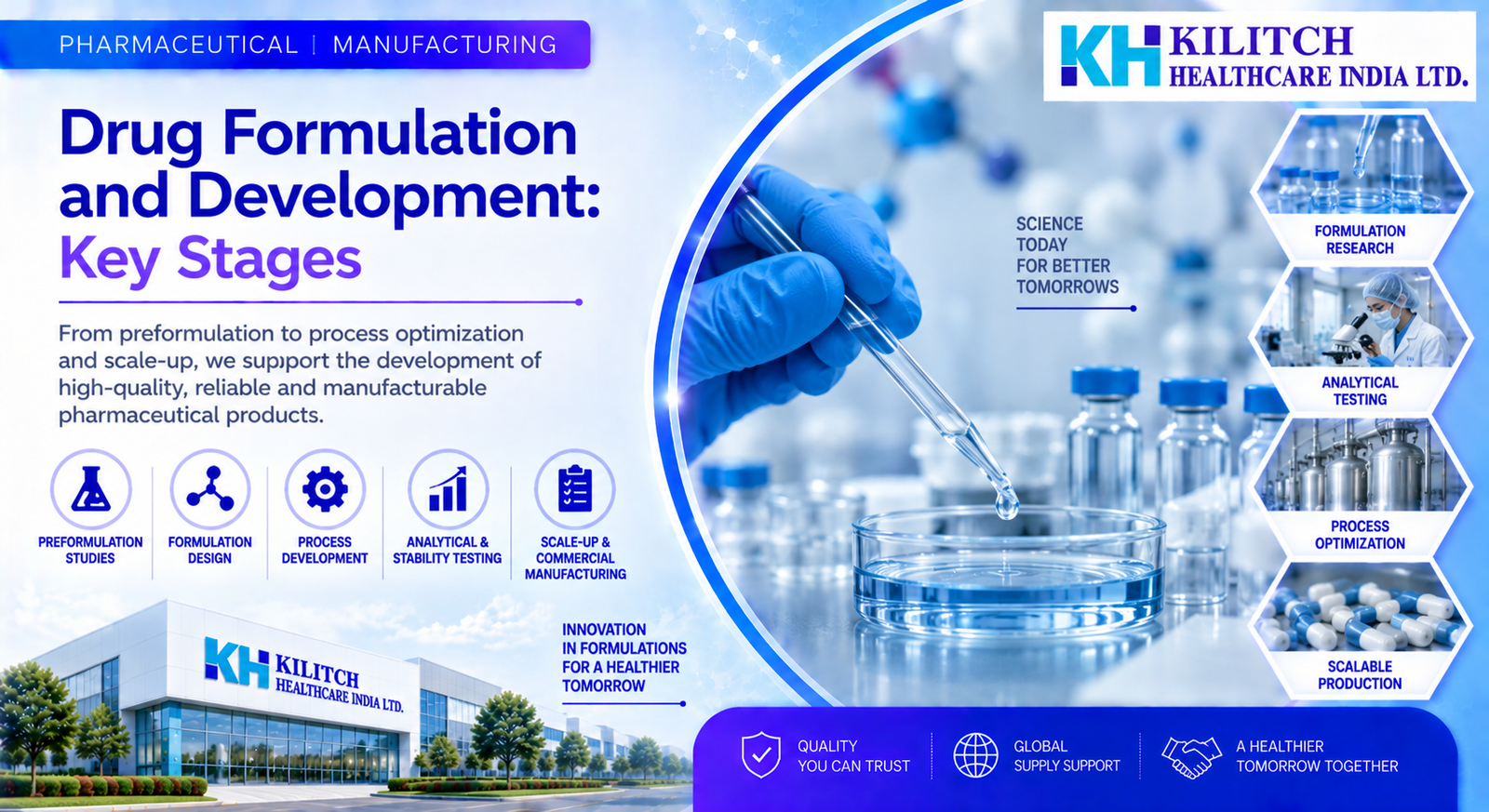
Key Stages of Drug Formulation and Development
1. Preformulation Studies
Preformulation provides information about the active ingredient and its physical properties. Solubility, stability, compatibility, particle characteristics and other attributes can influence formulation choices. Understanding these properties early can help guide the selection of excipients, dosage forms and processing approaches.
2. Formulation Design
Once key material properties are understood, development teams can begin designing the formulation. The choice of ingredients and their proportions depends on the desired product characteristics. Different dosage forms may require very different formulation strategies, and the intended route of administration can influence both formulation and manufacturing decisions.
3. Process Development
A formulation must be supported by a repeatable manufacturing process. Process development examines how materials are handled and converted into the finished dosage form. Parameters such as mixing, filling, temperature, time and other process conditions may need to be established and controlled according to the product.
4. Analytical and Stability Evaluation
Analytical testing helps establish whether the formulation meets defined quality requirements. Stability studies show how the product behaves over time under specified storage conditions. Together, these activities help teams understand product quality and establish specifications.
From Development to Commercial Manufacturing
Scale-Up Considerations
Moving a formulation from development scale to commercial production can introduce new variables. Commercial equipment may have different operating characteristics, batch sizes may be larger and material behavior can change with scale. Scale-up therefore requires careful assessment of process parameters and equipment suitability.
A successful scale-up aims to maintain the established quality attributes of the formulation while creating a process that is practical for routine production. Clear documentation and process understanding support this transition.
Technology Transfer
Technology transfer connects development knowledge with the manufacturing site or commercial production team. Information about the formulation, process parameters, analytical methods, specifications, equipment and critical controls needs to be transferred accurately. For businesses researching Kilitch Drugs, understanding this transfer process can help clarify how an established formulation moves into controlled commercial production.
For businesses researching
Kilitch Drugs
and related product-development requirements, technology transfer is one area worth examining because it can influence how efficiently an established formulation moves into controlled commercial production.
Specialized Formulation Development
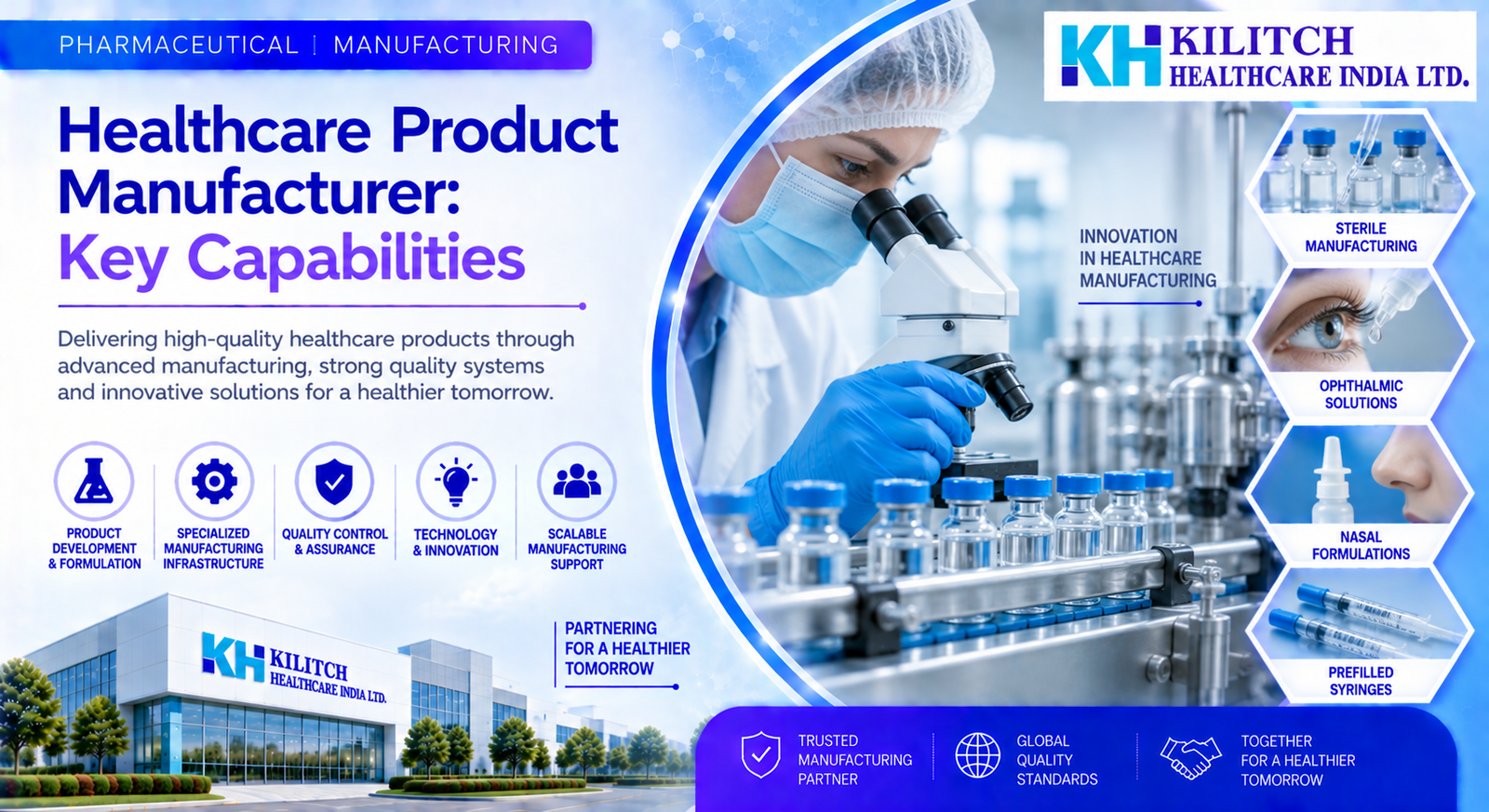
Not all medicines have the same formulation challenges. Sterile injectables, ophthalmic products, nasal formulations and prefilled delivery systems can require specialized development approaches and manufacturing controls. The route of administration, sterility requirements, viscosity, container system and product stability can all influence development decisions.
Kilitch Healthcare works across several specialized healthcare categories, including sterile injectables, ophthalmic formulations, nasal formulations and prefilled syringes. Businesses researching Kilitch Drugs can consider how dosage-form expertise and production environments support their intended product.
Specialized technology can also support formulation goals. For example, preservative-free delivery systems or gel-based formulations may require specific approaches to formulation, filling and packaging. Businesses evaluating these technologies can consider how formulation and manufacturing teams work together to translate them into commercial production.
The Role of Quality in Formulation Development
Defining Critical Quality Attributes
Development teams identify the characteristics that are important to product quality and performance. Depending on the dosage form, these may include assay, purity, uniformity, sterility, viscosity, particle characteristics, dissolution or other product-specific attributes. Understanding these characteristics helps guide formulation and process decisions.
Building a Robust Process
A robust development process considers how normal variation in materials and manufacturing conditions could affect the finished product. Developers may study process parameters and material attributes to understand which variables are most important. This knowledge can inform manufacturing controls and specifications.
Documentation and Traceability
Development decisions should be supported by clear documentation. Formulation records, test results, development reports and process information provide a foundation for technology transfer and regulatory activities.
Why Integrated Development and Manufacturing Matters
Development and manufacturing should not operate as completely separate activities. A formulation that performs well in development still needs to be practical, scalable and controllable in production. Early collaboration between formulation scientists, process teams, quality specialists and manufacturing personnel can help identify production challenges before commercial scale-up.
An integrated approach can also support faster decision-making when formulation or process adjustments are required. A manufacturer with development and production capabilities can evaluate changes with a clearer understanding of how they may affect equipment, quality controls and commercial supply. This continuity can be particularly valuable for products moving from development into long-term manufacturing.
How to Evaluate a Drug Development Partner
Look at Scientific and Technical Expertise
Review the partner’s formulation capabilities, dosage-form experience, development infrastructure and ability to support process optimization. The relevant expertise should match the product’s scientific and manufacturing requirements.
Assess Analytical and Quality Capabilities
Analytical testing and quality systems should be considered alongside formulation expertise. Development decisions depend on reliable data, while commercial manufacturing depends on controlled specifications, validation and documented processes.
Consider the Path to Commercialization
A development project should have a clear path toward manufacturing. Ask how the partner approaches scale-up, technology transfer, process validation and commercial production. Understanding this pathway early can make the transition from development to supply more structured.
Conclusion: Turning Formulation Into a Reliable Product
Drug formulation and development is the bridge between scientific product design and repeatable manufacturing. Preformulation, formulation optimization, process development, analytical testing, stability studies, scale-up and technology transfer each contribute to building a product that can be manufactured consistently.
For companies planning a new medicine or improving an existing product, evaluating the complete development pathway is essential. Reviewing drug formulation and development capabilities through the manufacturer’s platform can help businesses understand available expertise and assess whether development, technology transfer and commercial manufacturing capabilities align with their product objectives.