Understanding Intravitreal Injection Manufacturing
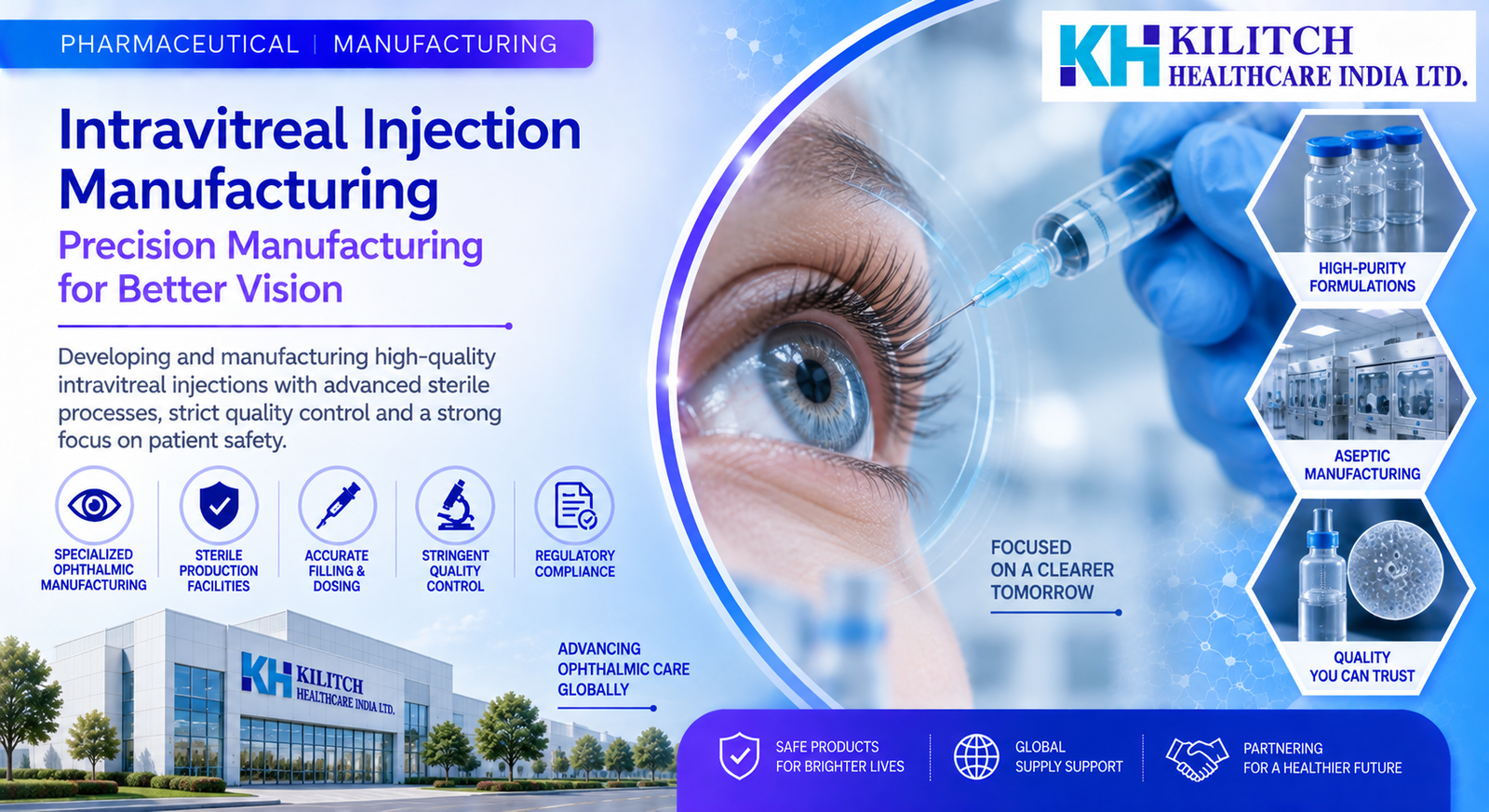
Intravitreal injections are specialized ophthalmic drug products administered directly into the vitreous cavity of the eye. They are used when a medicine requires targeted ocular delivery, making product quality, sterility, formulation characteristics, dosage accuracy, and packaging particularly important.
Intravitreal Injection Manufacturing involves a highly controlled process that can include formulation development, raw material qualification, aseptic processing, sterile filtration where appropriate, filling, container closure, inspection, packaging, and quality testing. Because these products are intended for intraocular administration, manufacturers must establish stringent controls throughout production.
For pharmaceutical companies developing or commercializing intravitreal products, selecting an experienced intravitreal drug manufacturing partner requires careful consideration of sterile processing capabilities, quality systems, technical expertise, scalability, and documentation.
Why Quality Is Critical
Intravitreal products require a high level of control because they are administered directly into the eye. Product specifications should address attributes such as sterility, particulate matter, formulation stability, container-closure integrity, dosage accuracy, and other characteristics relevant to the finished product.
Manufacturing processes should therefore be designed to minimize contamination risks while maintaining consistent product quality from batch to batch.
Key Considerations in Intravitreal Injection Manufacturing
Several technical areas require attention when developing and manufacturing intravitreal products. Formulation, filling, sterilization strategy, packaging, and quality control should be considered as interconnected elements.
Intravitreal Formulation Development
The formulation needs to maintain the required physical and chemical characteristics throughout manufacturing and the proposed shelf life. Depending on the active pharmaceutical ingredient and dosage form, developers may evaluate pH, osmolality, concentration, viscosity, stability, and compatibility with the selected container.
Formulation development should also consider the intended route of administration and the characteristics of the active ingredient. Changes in excipient concentration, processing conditions, or container materials can affect stability and product performance, so these factors should be evaluated systematically.
Aseptic Processing and Sterile Manufacturing
Sterility is a fundamental requirement for products intended for intraocular administration. Sterile injectable manufacturing requires controlled environments, qualified equipment, trained personnel, appropriate gowning practices, environmental monitoring, and validated processes.
Where applicable, sterile filtration may be incorporated into the manufacturing process. The selected approach depends on formulation characteristics, product compatibility, process design, and applicable requirements. Critical steps should be appropriately validated to demonstrate consistent performance.
Aseptic manufacturing requires careful control of personnel and material movement. Facility zoning, air handling, cleaning, disinfection, and intervention practices should work together to reduce contamination risks during critical operations.
Filling and Container-Closure Systems
Filling operations must provide consistent dosage and minimize the risk of contamination or product loss. Equipment selection, filling parameters, component preparation, and process controls should be established according to the product and manufacturing strategy.
Container-closure systems are particularly important for intravitreal products. Vials, syringes, or other presentations should be selected according to formulation compatibility, sterility maintenance, dose requirements, storage conditions, and intended use.
Container-closure integrity testing can help demonstrate that the packaging system maintains its protective function throughout the proposed shelf life and distribution process.
Quality Control in Intravitreal Drug Manufacturing
Quality control should cover raw materials, in-process operations, environmental conditions, packaging components, and finished products. Testing requirements depend on the formulation, dosage form, applicable standards, and target market.
Sterility and Particulate Control
Sterility testing forms part of the overall quality strategy for sterile products, but sterility assurance depends on the complete manufacturing process rather than a single finished-product test. Environmental monitoring, process validation, equipment controls, and aseptic practices all contribute to the control strategy.
Particulate control is another important consideration for injectable products. Manufacturing areas, components, equipment, containers, closures, and personnel practices should be managed to minimize the introduction of unwanted particles.
Stability and Finished-Product Testing
Finished-product evaluation may include assays, identification, impurities, pH, appearance, particulate matter, container-closure integrity, sterility-related testing, and other product-specific attributes.
Stability studies help establish how product quality changes under defined storage conditions. Data from appropriate stability programs can support proposed shelf life and storage requirements.
Packaging and Storage Considerations
Packaging must protect the product from contamination and environmental exposure while supporting safe handling. Material compatibility is important because interactions between the formulation and container components can affect product quality.
Storage conditions should be established based on product stability data and the characteristics of the formulation and packaging system. Clear labeling and controlled distribution practices are also important parts of the finished-product lifecycle.
Selecting an Ophthalmic Manufacturing Partner
Pharmaceutical companies evaluating an ophthalmic manufacturing partner should consider technical capabilities, quality systems, manufacturing infrastructure, validation practices, documentation, production capacity, and experience with sterile products.
A partner supporting ophthalmic injectable manufacturing should be able to communicate clearly about formulation requirements, filling formats, component specifications, analytical testing, batch documentation, and commercial manufacturing plans.
Scalability and Technology Transfer
Technology transfer is an important stage when moving a product from development to commercial manufacturing. Manufacturing parameters, specifications, analytical methods, equipment requirements, and process knowledge should be transferred in a controlled manner.
Scalability should be considered early. Equipment capacity, facility capabilities, component supply, production scheduling, and quality resources all influence the ability to increase output while maintaining consistent product quality.
Role of Ophthalmic Pharmaceutical Manufacturing
Specialized ophthalmic pharmaceutical manufacturing requires coordination between formulation science, sterile processing, engineering, quality assurance, analytical testing, and packaging. An integrated approach can help ensure that technical decisions made during development remain compatible with commercial production.
For B2B pharmaceutical companies, early discussions with a manufacturing partner can help clarify product specifications, packaging options, production requirements, and quality documentation before commercialization.
Regulatory and Documentation Considerations
Documentation is a key component of pharmaceutical manufacturing. Product specifications, batch records, analytical procedures, equipment records, validation documents, environmental monitoring results, and quality records should be maintained according to the applicable quality system and market requirements.
For companies preparing an intravitreal product for commercialization, regulatory expectations should be considered throughout development rather than only before launch. Early alignment between formulation, manufacturing, quality, and regulatory teams can help identify documentation and process requirements in advance.
Process Control and Risk Management
Process validation and risk assessment should be integrated into the manufacturing strategy. Critical process parameters and relevant quality attributes should be identified, monitored, and supported by appropriate evidence. This structured approach helps manufacturers understand where variability could affect product quality and provides a basis for establishing suitable controls. For commercial products, continued process monitoring can also help identify trends that may require investigation or corrective action.
Conclusion
Intravitreal Injection Manufacturing requires rigorous control across formulation, sterile processing, filling, packaging, testing, and storage. Because these products are intended for direct administration into the eye, manufacturers must establish processes that consistently address sterility, particulate control, formulation stability, dosage accuracy, and container-closure performance.
For pharmaceutical companies, selecting a manufacturing partner involves assessing technical expertise, quality systems, scalable infrastructure, documentation, and experience with sterile injectable products. Businesses exploring sterile injectable products can evaluate manufacturing capabilities according to their specific product and commercial requirements.