


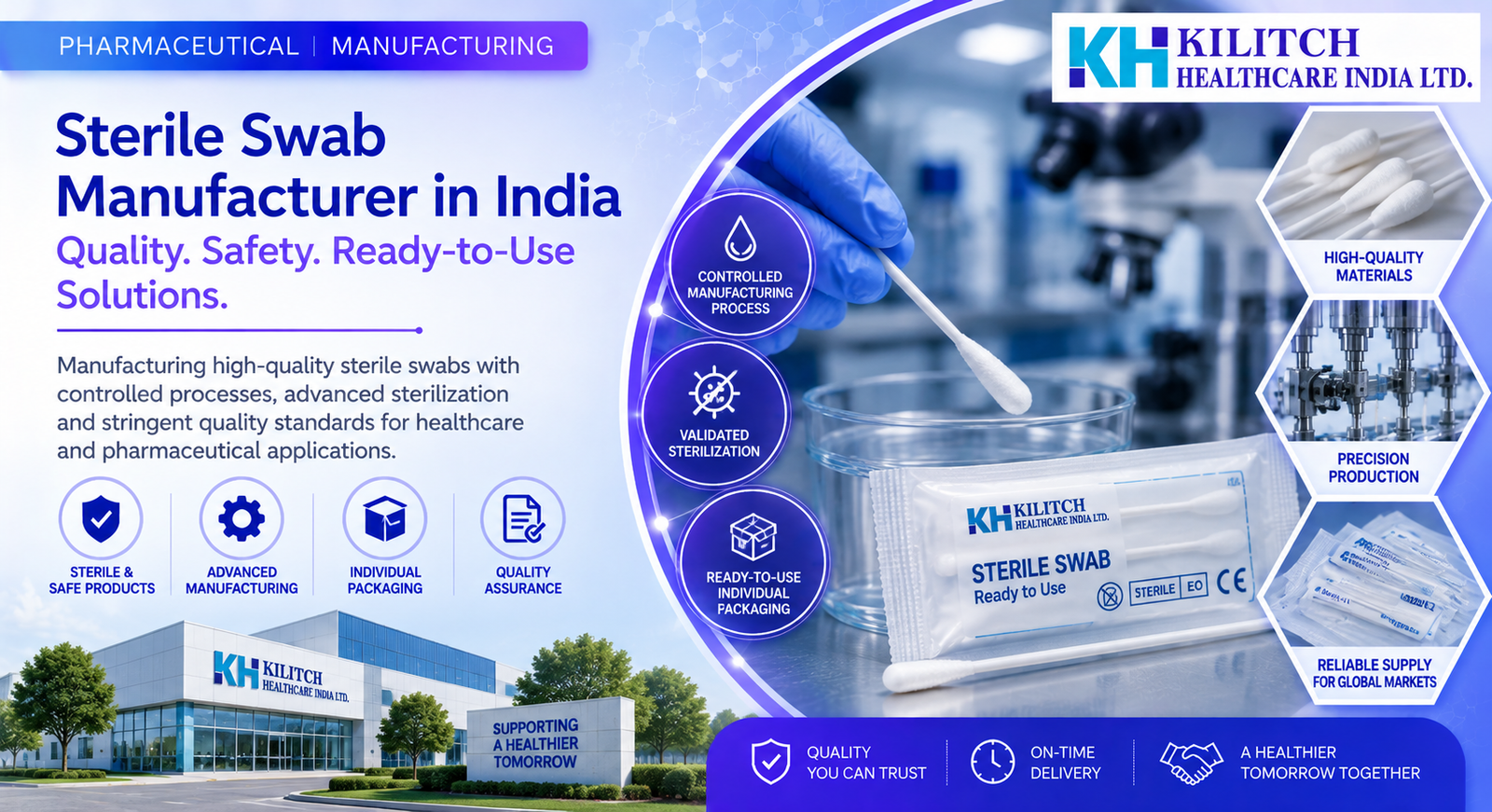
Sterile Swab Manufacturing: Delivering Consistent Ready-to-Use Products
Sterile swabs are designed for controlled application, preparation and other healthcare procedures where a clean, ready-to-use product is required. Their manufacturing involves material selection, formulation or coating where applicable, controlled processing, sterilization, packaging and quality checks. For organizations evaluating a reliable Sterile Swab Manufacturer in India, production capability should be considered alongside sterility, consistency, packaging integrity and intended application.
What Are Sterile Swabs?
Sterile swabs are healthcare products manufactured and packaged to provide a controlled, sterile applicator for a defined procedure or application. Depending on the product, a swab may contain an absorbent tip, a formulated preparation or another treatment-specific material. The finished unit is commonly supplied in individual packaging so it can be opened and used when required.
Sterile swabs can support clinical, pharmaceutical and procedural applications where ready-to-use presentation can improve convenience and reduce the need for on-site preparation. The exact design should be developed around the intended application, required contact characteristics, packaging format and applicable product specifications.
Key Stages of Sterile Swab Manufacturing
1. Material and Component Selection
Manufacturing begins with selecting appropriate materials for the applicator, swab tip, formulation and primary packaging. Material characteristics can affect absorbency, application performance, compatibility and product consistency. Components should be evaluated against defined specifications before they are approved for production.
Packaging components are equally important because the sterile barrier must protect the product until use. Material selection should therefore consider compatibility with the product and the sterilization process.
2. Formulation or Coating Preparation
Some sterile swabs are supplied with a specific formulation or preparation on the applicator. Where applicable, the formulation must be prepared under controlled conditions and applied consistently to achieve the required product characteristics. Factors such as composition, quantity, uniformity and stability can influence the finished swab.
Process parameters should be established to support repeatability from batch to batch. Consistent preparation is particularly important when the swab is designed to deliver a defined formulation during a procedure.
3. Swab Assembly and Processing
The selected components are assembled through controlled manufacturing operations. The process may involve placing the swab tip onto the applicator, applying a formulation where required, drying or conditioning, and preparing the finished unit for packaging. Equipment settings and operating procedures should be controlled to reduce variation.
The objective is to produce units with consistent physical characteristics and application performance while maintaining the requirements established for the product.
4. Sterilization
Sterilization is a critical stage when the finished swab is intended to be supplied as a sterile product. The sterilization approach should be selected according to the product, materials, packaging and validated process requirements. The process must achieve the intended level of sterility without adversely affecting the applicator, formulation or packaging.
Sterilization should be considered together with packaging because the primary pouch or other barrier system needs to remain suitable after processing. Validation and routine monitoring help demonstrate that the established process remains controlled.
5. Individual Packaging and Sealing
Individual packaging provides a practical ready-to-use format and helps protect the sterile swab during storage and handling. Seal quality, package integrity and material compatibility are important considerations. Packaging should also support identification, traceability and convenient opening at the point of use.
6. Inspection and Quality Control
Finished sterile swabs undergo appropriate quality checks against established specifications. Depending on the product, checks may address physical appearance, component integrity, formulation quantity or uniformity, packaging integrity and sterility-related requirements. Batch documentation and test results should be reviewed before release.
Why Sterility and Packaging Matter
Sterility is fundamental for products intended for applications where contamination can create a risk. A sterile swab therefore requires more than a sterilization step; the entire manufacturing pathway, from component handling through packaging, must support contamination control.
The package acts as the protective barrier after sterilization. If its integrity is compromised, the sterile condition of the product may no longer be maintained. For this reason, sealing operations, package materials and integrity checks should be incorporated into the overall quality system.
Benefits of Ready-to-Use Sterile Swabs
Ready-to-use sterile swabs can offer practical benefits for healthcare professionals and facilities. They can reduce preparation requirements, provide individually packaged units and support consistent presentation from one procedure to another. Where a formulated swab is required, the pre-prepared format can also reduce the need for manual application or preparation before use.
For manufacturers and healthcare brands, standardized ready-to-use products can simplify product handling and support a more consistent user experience. The final design should nevertheless be matched to the intended clinical or procedural application.
Important Quality Considerations for Sterile Swabs
Sterility Assurance
The sterile product manufacturing process should be designed around the applicable sterility requirements for the product. Controlled handling, validated sterilization where applicable and appropriate monitoring are important elements of the overall sterility strategy.
Material Compatibility
The swab material, applicator, formulation and packaging should be compatible with one another and with the selected sterilization process. Compatibility assessment can help prevent changes in appearance, performance or product characteristics during processing and storage.
Formulation Uniformity
For swabs containing a formulation, consistent application of the intended quantity is an important manufacturing consideration. Process controls should support uniformity so that individual units meet the established product specifications.
Packaging Integrity
Individual sterile packaging should maintain the required barrier throughout transportation and storage. Seal quality, material selection and package integrity should therefore be evaluated as part of product development and routine manufacturing.
Traceability and Documentation
Manufacturing records, material records, packaging information and quality results support product traceability. Clear documentation also helps establish accountability across production, quality control and release activities.
How to Choose a Sterile Swab Manufacturer in India
Companies evaluating a manufacturing partner should consider more than basic production capacity. Relevant factors include experience with sterile products, component sourcing, formulation or coating capabilities where applicable, sterilization infrastructure, individual packaging systems, quality-control processes and documentation practices.
It is also useful to understand how the manufacturer manages development and scale-up. A product that performs well during initial development may require additional process evaluation when production volumes increase. Equipment capability, material handling, packaging operations and sterilization parameters should remain aligned as the product moves toward commercial supply.
Clear communication is another important consideration. Defined specifications, responsibilities, quality expectations and supply requirements can help create a more effective long-term manufacturing relationship.
Sterile Swab Manufacturing at Kilitch Healthcare
Kilitch Healthcare’s capabilities include swab-sticks alongside sterile injectables, ophthalmic formulations, nasal formulations and prefilled syringes. Its manufacturing approach combines pharmaceutical R&D, specialized production and quality-focused processes. For businesses evaluating a sterile swab-stick manufacturer, this combination can help connect product requirements with practical manufacturing considerations.
Kilitch Healthcare highlights a Next Generation Sterile Applicator designed as a ready-to-use sterile swab-stick format. The company’s website describes the applicator as individually packed and intended to provide convenience while reducing the time, energy and storage associated with self-formulation by practitioners.
Conclusion
Sterile swab manufacturing brings together material selection, controlled processing, sterilization, packaging and quality management. Although the product may be compact, every component contributes to its safety, consistency and usability. Choosing an experienced medical swab manufacturing partner can help healthcare businesses manage these requirements more effectively and develop reliable ready-to-use products.


