Introduction: What Is Lyophilized Drug Manufacturing?
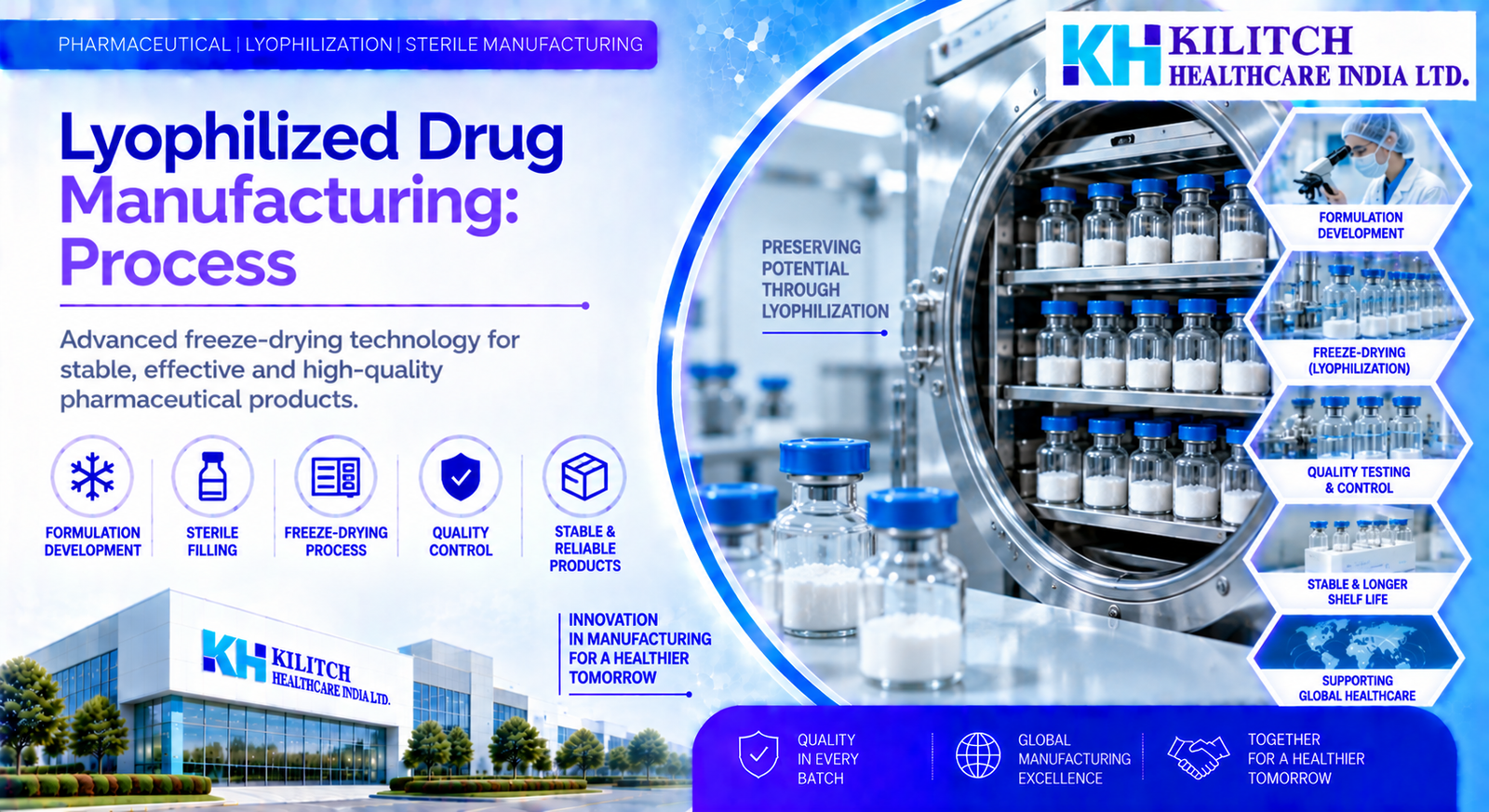
Lyophilized drug manufacturing is a specialized pharmaceutical process used to convert a prepared drug formulation into a dry, stable product through controlled freeze-drying. The approach is particularly valuable when a formulation is sensitive to moisture, temperature, or long-term storage in liquid form. By removing water under controlled conditions, manufacturers can help protect the physical and chemical characteristics of suitable drug products while creating a dosage form that can be reconstituted before use. Kilitch Healthcare combines pharmaceutical development and manufacturing capabilities, making the overall process easier to view as an integrated product journey rather than as an isolated drying operation.
Why Lyophilization Matters in Pharmaceutical Manufacturing
Many pharmaceutical ingredients have stability challenges when maintained as aqueous solutions for extended periods. Moisture can contribute to degradation, changes in potency, or physical instability. Lyophilization addresses this challenge by freezing the formulation and then removing ice through sublimation under reduced pressure. The resulting dry product can offer improved stability for appropriately selected formulations, while also supporting defined storage and distribution requirements.
However, freeze-drying is not automatically suitable for every medicine. The formulation, active ingredient, excipients, container system, intended route of administration, and target shelf life all influence whether lyophilization is appropriate. Effective development therefore starts with understanding the product before designing the manufacturing cycle.
Key Stages of Lyophilized Drug Manufacturing
1. Formulation Development and Product Assessment
The first stage is to evaluate how the formulation behaves during freezing and drying. Active pharmaceutical ingredients, excipients, concentration, pH, solubility, and thermal characteristics can all influence the process. Developers assess whether the formulation can produce an acceptable dried structure and whether the product will retain its intended performance after reconstitution.
2. Controlled Preparation and Sterile Filling
For sterile products, formulation preparation and filling must take place under carefully controlled conditions. Depending on the product, manufacturing may involve compounding, filtration, transfer, and filling into suitable vials or other approved containers. Fill volume, component compatibility, and process controls need to be consistent before the units enter the lyophilization stage.
3. Freezing and Primary Drying
Freezing determines the physical state in which the formulation enters the drying cycle. During primary drying, pressure and temperature are controlled so that frozen water is removed primarily through sublimation. The cycle must be designed around the characteristics of the specific formulation because an unsuitable combination of temperature, pressure, or duration can affect product structure and quality.
4. Secondary Drying and Final Moisture Control
After primary drying, secondary drying removes additional bound moisture. The objective is to achieve a suitable residual moisture level without damaging the product. The final moisture profile can influence stability, so cycle development and testing are important in establishing repeatable manufacturing conditions.
5. Stoppering, Inspection, and Packaging
Once the drying cycle is complete, containers are stoppered under controlled conditions. The container-closure system becomes part of the product protection strategy, helping preserve the dried formulation during storage and distribution. Finished units undergo appropriate inspection and quality testing before packaging and release.
Critical Quality Considerations
Formulation–Cycle Compatibility
A robust lyophilization process depends on compatibility between the formulation and the cycle. Small changes in concentration, excipient selection, or composition can alter freezing behavior and drying performance. For this reason, formulation development and process development should progress together.
Residual Moisture and Stability
Residual moisture is an important quality attribute for many freeze-dried products. Too much remaining moisture may affect stability, while excessive drying can also be undesirable for certain formulations. Appropriate analytical testing and stability studies help establish product-specific targets and storage conditions.
Container-Closure Integrity
The vial, stopper, and seal must provide appropriate protection throughout the product’s intended shelf life. Compatibility with the formulation, integrity of the closure system, and protection against environmental exposure should therefore be considered during development rather than treated as final-stage packaging decisions.
Aseptic Processing and Contamination Control
When the finished product is sterile, contamination control is fundamental throughout manufacturing. Personnel practices, facility controls, equipment, material movement, environmental monitoring, and validated procedures work together to maintain the required level of sterility assurance. These controls must remain consistent from preparation through filling, lyophilization, stoppering, inspection, and release.
Why an Integrated Manufacturing Approach Matters
Lyophilized products require close coordination between product development, manufacturing, quality, and packaging teams. An experienced pharmaceutical manufacturing partner can help connect these functions so that development decisions are practical for commercial production. This is particularly important when a product moves from laboratory or pilot work into larger-scale manufacturing, where equipment differences and process controls can affect cycle performance.
An integrated approach can also improve project coordination. Formulation requirements can be considered alongside filling capabilities, lyophilization equipment, container systems, analytical testing, documentation, and supply planning. This reduces the risk of discovering manufacturing constraints only after significant development work has been completed.
Scale-Up Considerations for Lyophilized Products
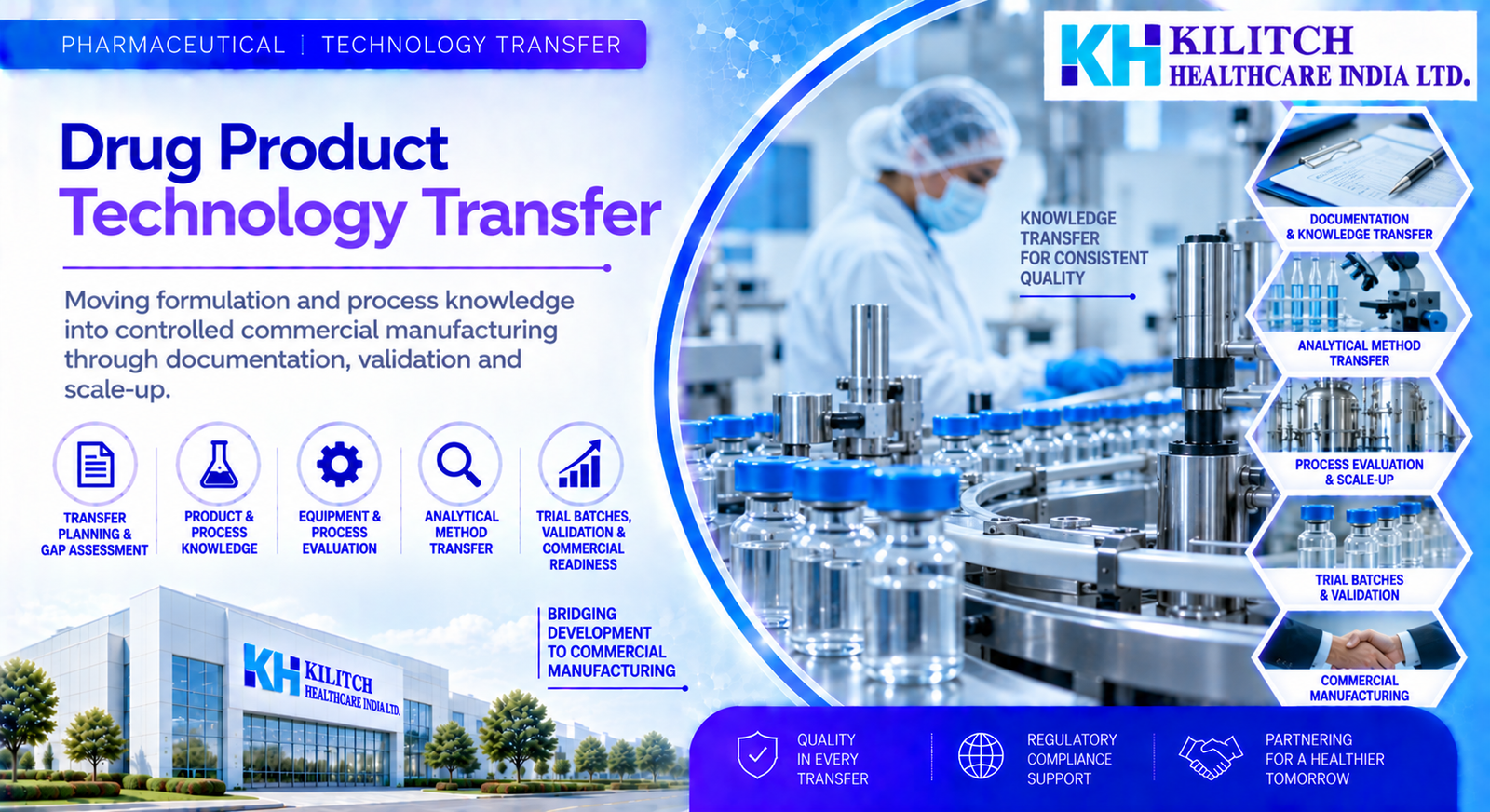
Moving a lyophilized product from development to commercial manufacturing requires more than increasing batch size. Heat and mass transfer characteristics can change with equipment configuration, load size, shelf arrangement, and process conditions. The manufacturing team must evaluate whether the established cycle remains appropriate and whether critical process parameters can be controlled consistently at the intended scale.
Process knowledge is therefore essential during technology transfer and scale-up. Defined acceptance criteria, appropriate development data, equipment understanding, and documented procedures can help support a smoother transition. Commercial readiness should be assessed alongside product quality so that the final process is both scientifically sound and operationally repeatable.
Choosing the Right Manufacturing Partner
Companies evaluating lyophilized drug manufacturing should look beyond the availability of a freeze dryer. Important factors include formulation-development expertise, sterile filling capabilities, process-development experience, quality systems, analytical support, container-closure knowledge, documentation, and the ability to support commercial production.
Lyophilized Drug Manufacturing at Kilitch Healthcare
Kilitch Healthcare operates across pharmaceutical development and specialized manufacturing, with capabilities that include sterile injectable products in liquid and powder forms, along with ophthalmic and nasal formulations, prefilled syringes, and other healthcare products. Its manufacturing model brings research, development, production, and quality considerations into the same broader ecosystem.
For companies exploring lyophilized pharmaceutical manufacturing, this integrated capability can be valuable because formulation behavior, sterile filling, freeze-drying, packaging, testing, and commercial requirements are closely connected. A coordinated approach helps ensure that the manufacturing strategy reflects the specific characteristics of the product.
Conclusion: Supporting Stable Pharmaceutical Products
Lyophilized drug manufacturing is a carefully engineered process that combines formulation science, controlled freezing, primary and secondary drying, sterile handling, container-closure protection, quality testing, and packaging. Its success depends on developing the product and process together rather than treating freeze-drying as a standalone production step.
For pharmaceutical companies developing products that require improved stability in a dry state, choosing the right technical and manufacturing partner can make a meaningful difference. With appropriate formulation assessment, cycle development, quality controls, and scale-up planning, lyophilization can support reliable pharmaceutical production from development through commercial supply.
To learn more about Kilitch Healthcare’s pharmaceutical development and manufacturing capabilities, explore the Kilitch Healthcare website and review the solutions relevant to your product and manufacturing requirements.