Introduction: Why Nasal Drug Delivery Matters
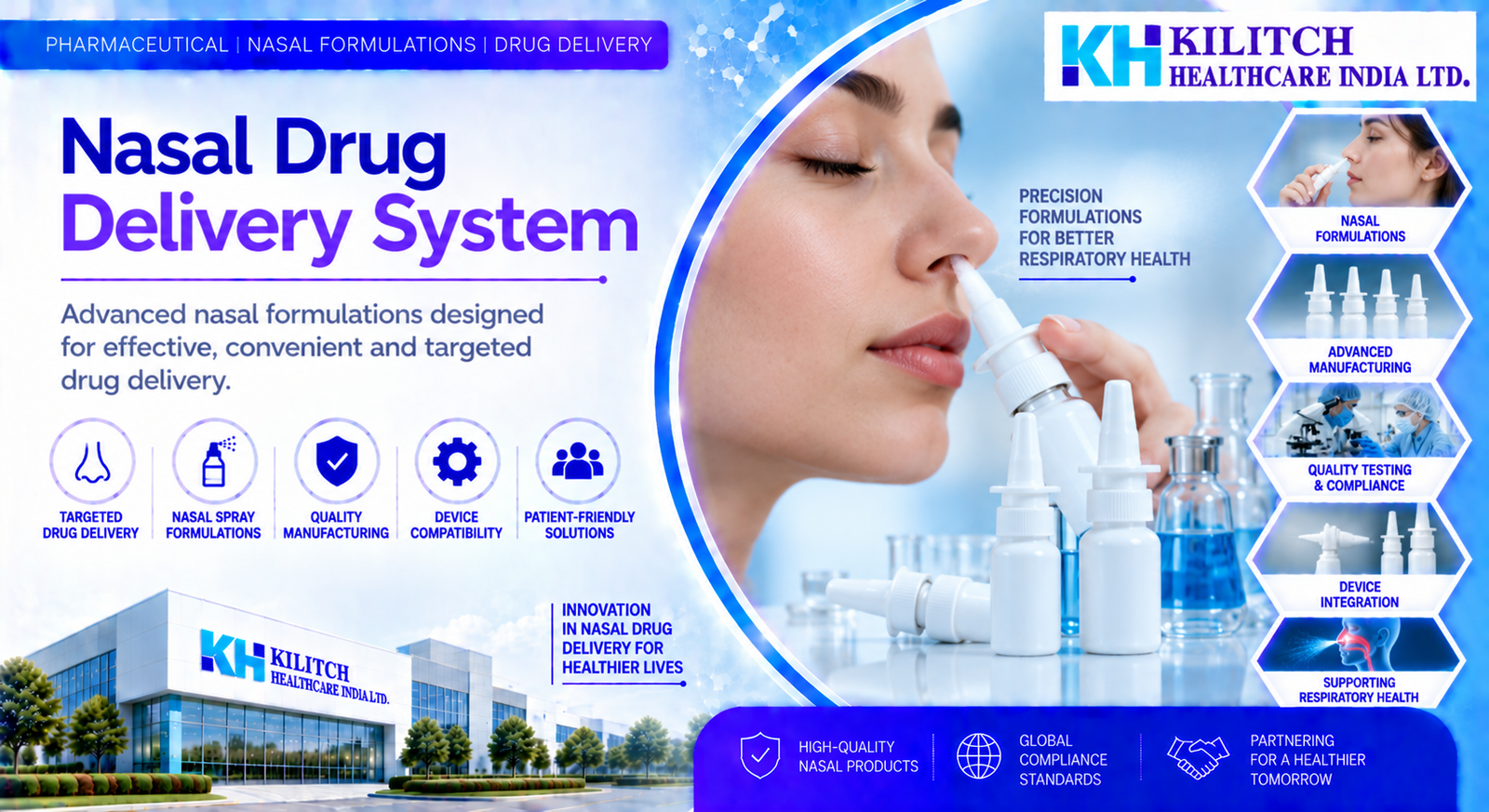
A nasal drug delivery system is designed to administer a pharmaceutical formulation through the nasal route, using the nasal cavity as the intended site of delivery. Depending on the product, this route can support local treatment or systemic drug delivery. Developing a reliable nasal product requires more than selecting a spray device; formulation properties, dose delivery, packaging, manufacturing controls and product quality all need to work together. Kilitch Healthcare operates across specialized pharmaceutical categories, including nasal formulations, alongside sterile injectables, ophthalmic products and prefilled syringes.
What Is a Nasal Drug Delivery System?
A nasal drug delivery system combines a pharmaceutical formulation with an appropriate method of administering that formulation through the nose. The system may include the drug product, container, closure and delivery device, depending on the dosage form. A nasal spray is one common format, but the broader concept is the complete product and delivery arrangement rather than the device alone.
For a pharmaceutical company, this means formulation development and delivery-system selection should be considered together. Factors such as the active ingredient, concentration, solubility, viscosity, dose requirements, intended use and packaging can influence the final product design.
Advantages of Nasal Drug Delivery
Rapid and Convenient Administration
Nasal administration can provide a convenient alternative to other routes when the formulation and therapeutic application are appropriate. A product can be administered directly through the nasal route without requiring the patient to swallow a tablet or use an injection.
Potential for Local or Systemic Delivery
The nasal route can be used for products intended to act locally in the nasal passages, while selected formulations may be developed for systemic exposure. The appropriate approach depends on the drug substance, formulation characteristics and intended therapeutic objective. These requirements should be established early so the product is designed around its intended performance.
Patient-Friendly Delivery
A well-designed nasal product can offer a practical administration experience when the formulation, dose and delivery device are appropriately matched. Ease of use, consistency of delivered dose and packaging design can all influence how effectively the final product supports routine administration.
Key Components of a Nasal Drug Delivery System
Formulation
The formulation is central to product performance. Solubility, pH, viscosity, concentration and other characteristics can influence processing and delivery. Excipients must be selected appropriately for the intended product, while stability considerations should be evaluated under the proposed storage conditions.
Container and Closure
The container and closure system protects the formulation during storage and handling. Compatibility between the formulation and packaging materials should be evaluated because interactions can affect product quality over time.
Delivery Device
The delivery device is an important part of a nasal product because it determines how the formulation is administered. Device characteristics can influence dose consistency, spray performance and user experience. For this reason, device selection should be assessed alongside formulation development rather than being treated as a final packaging decision.
Nasal Formulation Development Considerations
Formulation Properties
A nasal formulation needs to maintain suitable physical and chemical characteristics throughout development and storage. Development teams may evaluate parameters such as pH, viscosity, drug content, appearance, solubility and stability according to the product.
Device Compatibility
Formulation and device compatibility can affect the performance of the finished product. The formulation must work appropriately with the selected components, while the device must provide the intended delivery characteristics. Evaluating both elements together can help identify potential manufacturing or performance issues before commercial production.
Manufacturing Process for Nasal Pharmaceutical Products
Nasal pharmaceutical manufacturing generally involves controlled preparation of the formulation, appropriate processing, filling into the selected container or delivery system, packaging, inspection and quality testing. Depending on the product, operations can include controlled mixing, dissolution, filtration or other product-specific steps. Pharmaceutical manufacturing capabilities need to be aligned with the formulation, filling requirements and intended market.
1. Raw-Material and Component Control
Active ingredients, excipients, containers, closures and delivery components all contribute to the final product. Their identity, quality and suitability should be controlled according to established specifications. Component compatibility is particularly important where the formulation comes into direct contact with packaging or device materials.
2. Controlled Formulation Preparation
The formulation is prepared using defined procedures and process parameters. Mixing, dissolution, temperature, filtration and other operations may be relevant depending on the formulation. Consistent process control helps reduce batch-to-batch variation and supports reproducible product quality.
3. Filling and Assembly
The prepared formulation is transferred into the selected container or delivery system under controlled conditions. Fill quantity, equipment performance, component handling and line controls can influence the consistency of the finished product. Assembly procedures should also ensure that the delivery system functions as intended.
4. Packaging and Inspection
Packaging protects the product during storage, transport and handling. Finished units are inspected for relevant physical and packaging attributes, while manufacturing records are reviewed as part of the quality process. Appropriate controls help establish that the product meets its defined specifications before release.
Quality Considerations for Nasal Drug Delivery Systems
Dose and Delivery Consistency
A nasal product should deliver the intended quantity consistently according to its established specifications. The interaction between formulation, container and delivery device can influence this performance. Testing and process controls should therefore reflect the characteristics that are critical to the finished product.
Stability and Packaging Compatibility
Stability studies help establish how the product behaves during its proposed storage period. The programme may consider drug content, degradation, formulation characteristics and compatibility with the container or delivery system. Packaging should provide suitable protection against relevant environmental factors and maintain product quality.
Documentation and Process Control
Controlled documentation supports traceability throughout development and manufacturing. Specifications, batch records, test results, procedures and quality records provide evidence that the product has been produced and evaluated according to established requirements.
Why Integrated Development and Manufacturing Matters
Nasal products bring together formulation science, delivery-device considerations and manufacturing requirements. When these areas are developed separately, practical issues can emerge later in the project. An integrated approach allows formulation, packaging, filling, quality and commercial manufacturing considerations to be reviewed together.
For companies evaluating a partner, an integrated pharmaceutical development approach can help connect early formulation decisions with production requirements.
Nasal Drug Delivery Systems at Kilitch Healthcare
Kilitch Healthcare identifies nasal formulations among its specialized pharmaceutical manufacturing capabilities. Its broader portfolio also includes sterile injectables, ophthalmic formulations, prefilled syringes and swab-sticks, supported by pharmaceutical R&D and quality functions. This range allows product requirements to be considered within a wider manufacturing environment.
For a company developing or commercializing a nasal pharmaceutical product, the manufacturing partner may need to support formulation assessment, component selection, process development, filling, packaging, testing and supply planning. Evaluating these capabilities together can help create a clearer path from product concept to commercial production.
Conclusion: Building Reliable Nasal Pharmaceutical Products
A nasal drug delivery system is more than a spray device. It is the combination of formulation, container, delivery mechanism, manufacturing process and quality controls that enables the intended product performance. Careful development of each element can help support consistency, stability and practical administration. Kilitch Healthcare offers specialized pharmaceutical manufacturing capabilities that include nasal formulations, providing a potential manufacturing environment for businesses evaluating nasal product development and commercial supply.