Understanding Sterile Swab Manufacturing
Sterile swabs are important consumable products used across healthcare, pharmaceutical, laboratory, diagnostic, and clinical settings. Depending on their design and intended application, they can support specimen collection, wound care, preparation procedures, application of solutions, and other controlled medical processes.
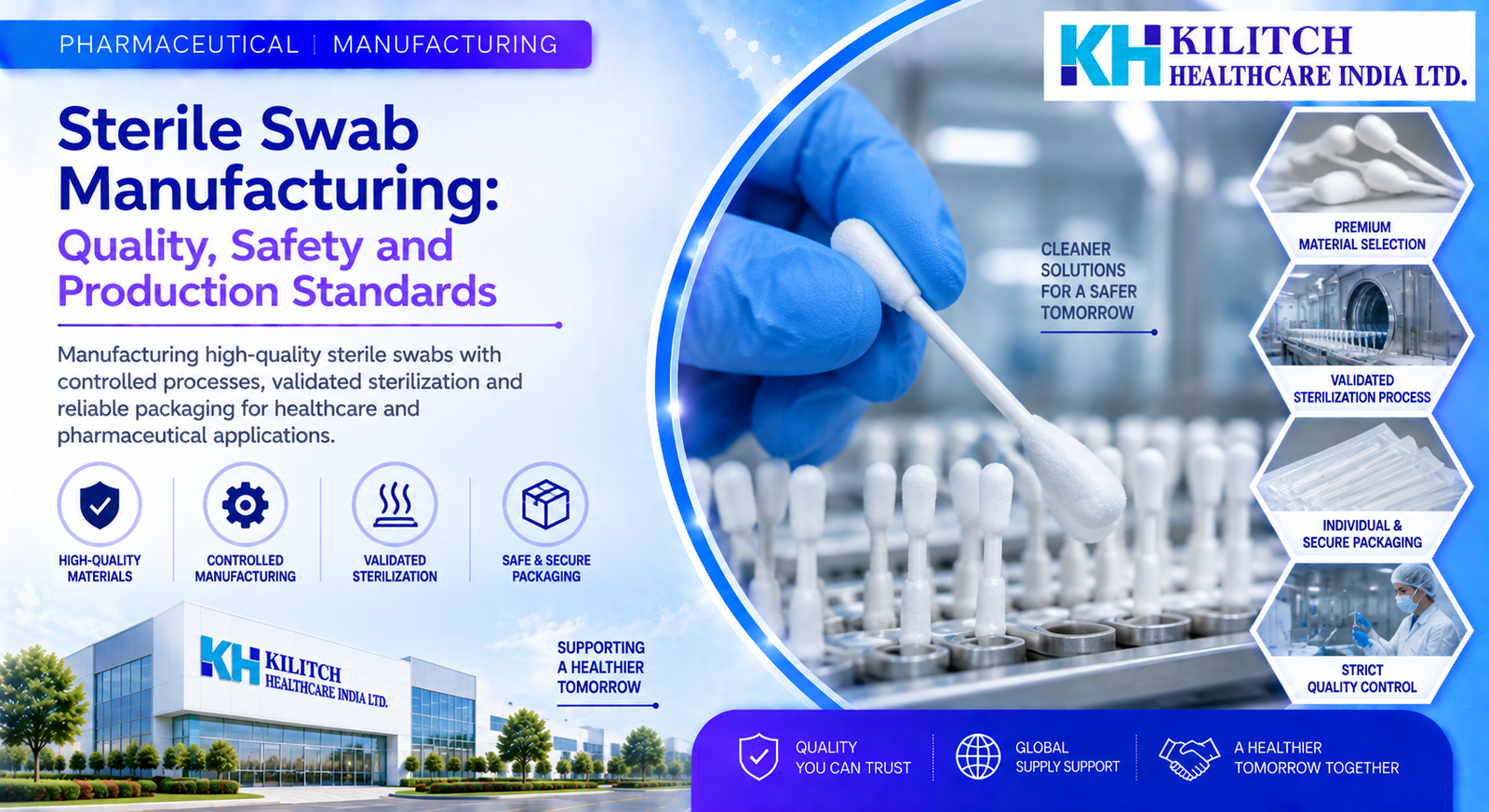
Sterile Swab Manufacturing involves several carefully controlled stages, including raw material selection, swab assembly, sterilization, packaging, inspection, and quality control. For B2B pharmaceutical and healthcare companies, understanding these processes is essential when evaluating suppliers and determining whether a particular swab meets the requirements of its intended application.
Selecting an appropriate sterile swab manufacturer involves looking beyond production capacity. Buyers should also consider quality systems, material consistency, sterilization controls, packaging integrity, documentation, scalability, and the manufacturer’s ability to maintain consistent product specifications.
Why Sterility Matters
Sterility is a critical consideration for swabs intended for applications where unwanted microorganisms could affect a procedure, specimen, or product. A sterile swab must remain protected from contamination throughout manufacturing, packaging, transportation, storage, and distribution until the point of use.
This requires an integrated approach in which manufacturing controls and packaging systems work together. Maintaining a controlled production environment, implementing appropriate process controls, and using validated sterilization methods can help manufacturers consistently achieve the defined requirements for sterile products.
Materials Used in Sterile Swab Production
The materials selected for a swab can influence its absorbency, strength, flexibility, sampling characteristics, and compatibility with the intended application. Material selection should therefore be based on clearly defined product specifications rather than simply focusing on cost.
Cotton and Synthetic Tip Materials
Sterile cotton swabs commonly use cotton fibers for their absorbent tips. Other swab designs may use synthetic materials such as rayon or polyester, depending on the intended purpose.
Different materials can provide different absorption and release characteristics. For diagnostic or specimen-collection applications, manufacturers may need to consider factors such as specimen recovery, fiber shedding, chemical compatibility, and interaction with the testing process.
Shaft and Applicator Materials
The shaft is another important component of the swab. Depending on the intended application, manufacturers may use plastic, paper, or other suitable materials.
Important characteristics can include flexibility, rigidity, dimensions, handling properties, and disposal requirements. The tip and shaft should ultimately be evaluated as an integrated product to ensure that the complete swab performs consistently.
Key Stages in Sterile Swab Manufacturing
The production of sterile swabs generally involves several interconnected stages. Maintaining consistency at each stage helps support the quality of the finished product.
Raw Material Preparation
Manufacturing begins with the selection and inspection of appropriate raw materials. Materials should be evaluated against established specifications before being released for production.
Depending on the product, relevant characteristics may include dimensions, cleanliness, physical properties, absorbency, fiber characteristics, and material integrity.
Strong incoming-material controls provide the foundation for consistent manufacturing and can help reduce variations during subsequent production stages.
Swab Assembly
During assembly, the absorbent tip is formed and attached securely to the shaft. Manufacturing parameters can vary according to the product design and materials being used.
Consistency in tip dimensions, attachment, positioning, and overall construction is important. Variations in assembly can potentially influence the swab’s handling and intended performance.
Automated or controlled production systems can help improve repeatability, particularly for commercial-scale production where large numbers of units need to meet the same specifications.
Sterilization
Swab sterilization is one of the most important stages when manufacturing products intended to be supplied as sterile. The selected sterilization method should be appropriate for the swab materials, packaging configuration, and intended product requirements.
The process must be appropriately validated to demonstrate that it can achieve the required microbial control while maintaining the physical and functional characteristics of the swab.
Manufacturers should also consider how sterilization conditions interact with the tip material, shaft, adhesives or attachment systems, and packaging components.
Packaging Considerations for Sterile Swabs
Packaging is an essential part of sterile product manufacturing because it provides protection after sterilization and during subsequent handling, transportation, and storage.
Individual Sterile Packaging
Individual packaging can help protect each swab from environmental exposure until it is opened for use. Depending on the product design, packaging formats may include pouches, peelable packs, or other suitable sterile-barrier configurations.
The packaging format should be selected according to the product’s intended application, sterilization process, storage requirements, and distribution conditions.
Package Integrity
A sterilized product can only remain sterile if its protective packaging maintains its integrity. Manufacturers therefore need to evaluate sealing processes and packaging materials to ensure they provide an appropriate barrier throughout the intended shelf life.
For B2B buyers, package integrity is an important factor when assessing the overall quality of a sterile swab product. Packaging should also be suitable for transportation and routine handling without compromising the sterile barrier.
Quality Control in Sterile Swab Manufacturing
Quality control should extend across every stage of production, from incoming raw materials to final product release. A comprehensive quality approach helps manufacturers identify potential deviations and maintain consistency between batches.
In-Process Quality Checks
In-process controls can include checks related to swab dimensions, tip attachment, material consistency, packaging operations, and other defined process parameters.
These controls allow manufacturers to identify variations during production rather than relying solely on finished-product inspection.
Finished Product Testing
Finished products may undergo testing and inspection according to their specifications, intended application, regulatory requirements, and applicable standards.
Depending on the product, evaluations may include visual inspection, dimensional checks, packaging integrity assessment, sterility-related testing, and other relevant quality attributes.
Documentation of these activities is also important for B2B customers that require traceability, batch information, quality records, and supporting documentation.
Selecting the Right Sterile Swab Manufacturer
Choosing a supplier is a strategic decision for pharmaceutical, healthcare, and diagnostic companies. A capable supplier should be evaluated based on its manufacturing infrastructure, quality systems, technical expertise, production capacity, and ability to meet defined specifications.
Evaluate Manufacturing Capabilities
A prospective supplier should have appropriate systems for raw material management, controlled production, sterilization, packaging, quality control, and batch documentation.
For companies looking for a broader manufacturing relationship, experience in pharmaceutical and healthcare production can also be valuable. The ability to coordinate technical requirements, specifications, packaging formats, and production schedules can contribute to a more efficient supply relationship.
Consider Scalability
Commercial requirements can change over time. A product may initially require relatively small quantities before demand increases following market expansion.
For this reason, B2B buyers should consider whether a supplier has sufficient production capacity and supply-chain planning to support changing requirements while maintaining consistent quality.
Scalability should also be considered alongside lead times, minimum order quantities, packaging configurations, raw material availability, and quality documentation.
Applications of Sterile Swabs
Sterile swabs have applications across several healthcare and laboratory environments. The appropriate product depends on its design, material composition, sterility requirements, and intended use.
Clinical and Healthcare Applications
Sterile swabs may be used for specimen collection, wound-related procedures, surface preparation, application of solutions, and other clinical applications where a sterile product is required.
The exact swab specification should always be matched to the intended procedure and relevant product requirements.
Diagnostic and Laboratory Applications
In diagnostic environments, swabs can support specimen collection and transportation. Here, factors such as tip material, specimen recovery, shaft design, and compatibility with collection systems can be particularly important.
Manufacturers serving diagnostic markets need to consider the requirements of the complete collection workflow rather than treating the swab as an isolated component.
Trends in Sterile Medical Products
The sterile medical products sector continues to evolve through developments in materials, manufacturing processes, packaging systems, sterilization technologies, and quality management.
Manufacturers are increasingly focused on achieving consistent product performance while improving production efficiency and maintaining appropriate sterility assurance. At the same time, B2B customers are placing greater emphasis on supplier reliability, documentation, traceability, and the ability to support changing product requirements.
For manufacturers, this means that process control and quality management remain central to long-term competitiveness. Any changes to materials, assembly processes, sterilization methods, or packaging should be appropriately evaluated to ensure that product specifications and quality requirements continue to be met.
Benefits of Working With an Experienced Manufacturing Partner
For pharmaceutical and healthcare companies, working with an experienced supplier can simplify several aspects of product sourcing and manufacturing coordination.
Consistent Production
Established production procedures and defined quality controls can support batch-to-batch consistency. This is particularly important for customers that require predictable product specifications across recurring orders.
Quality and Documentation
B2B customers often require clear documentation covering product specifications, batch details, testing, packaging, and quality requirements. A structured quality system can help support these expectations.
Long-Term Supply Support
A manufacturing relationship should ideally extend beyond individual orders. Reliable communication, production planning, quality consistency, and scalability can help businesses establish a more dependable supply chain for sterile products.
Conclusion
Sterile Swab Manufacturing requires careful control across material selection, assembly, sterilization, packaging, inspection, and quality assurance. Each stage contributes to the overall quality and suitability of the finished product, making an integrated manufacturing approach essential for pharmaceutical and healthcare businesses.
For B2B buyers, selecting a supplier should involve evaluating manufacturing capabilities, quality systems, sterilization processes, packaging integrity, scalability, and documentation. Companies exploring sterile healthcare products can evaluate suitable manufacturing partners based on their specific product, quality, and supply requirements.