Inside Sterile Ophthalmic Manufacturing: Why Precision, Purity & Innovation Are Non-Negotiable
Introduction: When a Drop is More Than a Drop
The human eye is one of the most complex and sensitive organs in the body. It has no immune barrier equivalent to the skin, making it acutely vulnerable to contamination. A single particle — invisible to the naked eye — in an ophthalmic product can cause infection, inflammation, or permanent vision loss. This is why sterile ophthalmic manufacturing is not merely a regulatory requirement; it is the very foundation of safe, effective eye care.
Across the globe, the ophthalmic drug market is growing rapidly — driven by an aging population, increasing prevalence of dry eye disease, glaucoma, and diabetic retinopathy, and a rising demand for surgical eye care products. Yet, this growth brings with it an equally rising responsibility: every eye drop, gel, injectable, or prefilled syringe that reaches a patient must be produced under conditions of absolute purity.
At Kilitch Healthcare, sterile ophthalmic manufacturing is at the heart of what we do. Through our dedicated Eyekare Division, we have spent decades refining our processes, integrating internationally acclaimed technologies, and building a manufacturing ecosystem that sets benchmarks for quality, precision, and innovation.
We take you inside the world of sterile ophthalmic manufacturing — what it means, what it demands, and what it takes to do it right.
What Is Sterile Ophthalmic Manufacturing?
Sterile ophthalmic manufacturing refers to the production of eye care formulations — including eye drops (solutions and suspensions), ophthalmic gels, ointments, intravitreal injectables, and prefilled syringes (PFS) — under strictly controlled conditions that eliminate microbial, particulate, and chemical contamination.
Unlike oral drug manufacturing, ophthalmic products are applied directly to or injected into the eye. This means:
- There is no second line of defense against contamination — the eye’s tissues are directly exposed.
- Even sub-visible particulate matter (particles too small to see) can trigger serious adverse reactions.
- The pH, osmolarity, and viscosity of the product must be precisely calibrated to match the physiology of the eye.
- Preservative systems, if used, must be effective yet non-toxic to delicate ocular tissues.
- Sterility assurance is non-negotiable — the Sterility Assurance Level (SAL) must be 10⁻⁶ or better.
Common product categories in sterile ophthalmic manufacturing include: topical eye drops and solutions, ophthalmic suspensions (where the active drug is in particle form), gel-forming eye drops for extended retention, intravitreal injectables for retinal disease, and prefilled syringes for surgical use.
The Regulatory Backbone — Standards That Cannot Be Compromised
Sterile ophthalmic manufacturing is one of the most heavily regulated segments of pharmaceutical production. Manufacturers must comply with a complex web of international and national standards — not just to gain market access, but to genuinely protect patient safety.
Key Global Regulatory Frameworks
| Standard / Body | Key Requirements for Ophthalmic Manufacturing |
| WHO-GMP | Aseptic processing, validated sterilization, in-process controls, QA documentation |
| US FDA (21 CFR Part 211) | Current Good Manufacturing Practices (cGMP) for finished pharmaceuticals, container/closure integrity |
| EU GMP (Annex 1) | Detailed requirements for sterile manufacturing — cleanroom classification, HVAC, environmental monitoring |
| Schedule M (India) | Revised Indian GMP standards now aligned with WHO-GMP for sterile products |
| ISO 14644 | Cleanroom and controlled environment standards for air classification |
Kilitch Healthcare’s manufacturing facility holds multiple international accreditations, reflecting our commitment to meeting the highest global standards — not just for domestic markets, but for regulated export markets across Europe, Africa, Asia, and beyond.
The Manufacturing Process — Step by Step
Producing a sterile ophthalmic product is a multi-stage, highly controlled process. Every step is governed by Standard Operating Procedures (SOPs), validated methods, and continuous environmental monitoring. Here is a breakdown of the key stages:
Step 1: Formulation Development
The journey begins in the laboratory, where formulation scientists design the product to meet precise physiological and pharmacological requirements. This includes balancing pH (ideally between 6.5–7.4, matching tear fluid), optimizing osmolarity (isotonic at approximately 300 mOsm/kg), selecting appropriate viscosity enhancers for retention, choosing between preserved and preservative-free formulations, and ensuring API stability and bioavailability at the ocular surface.
Step 2: Cleanroom Environment Setup
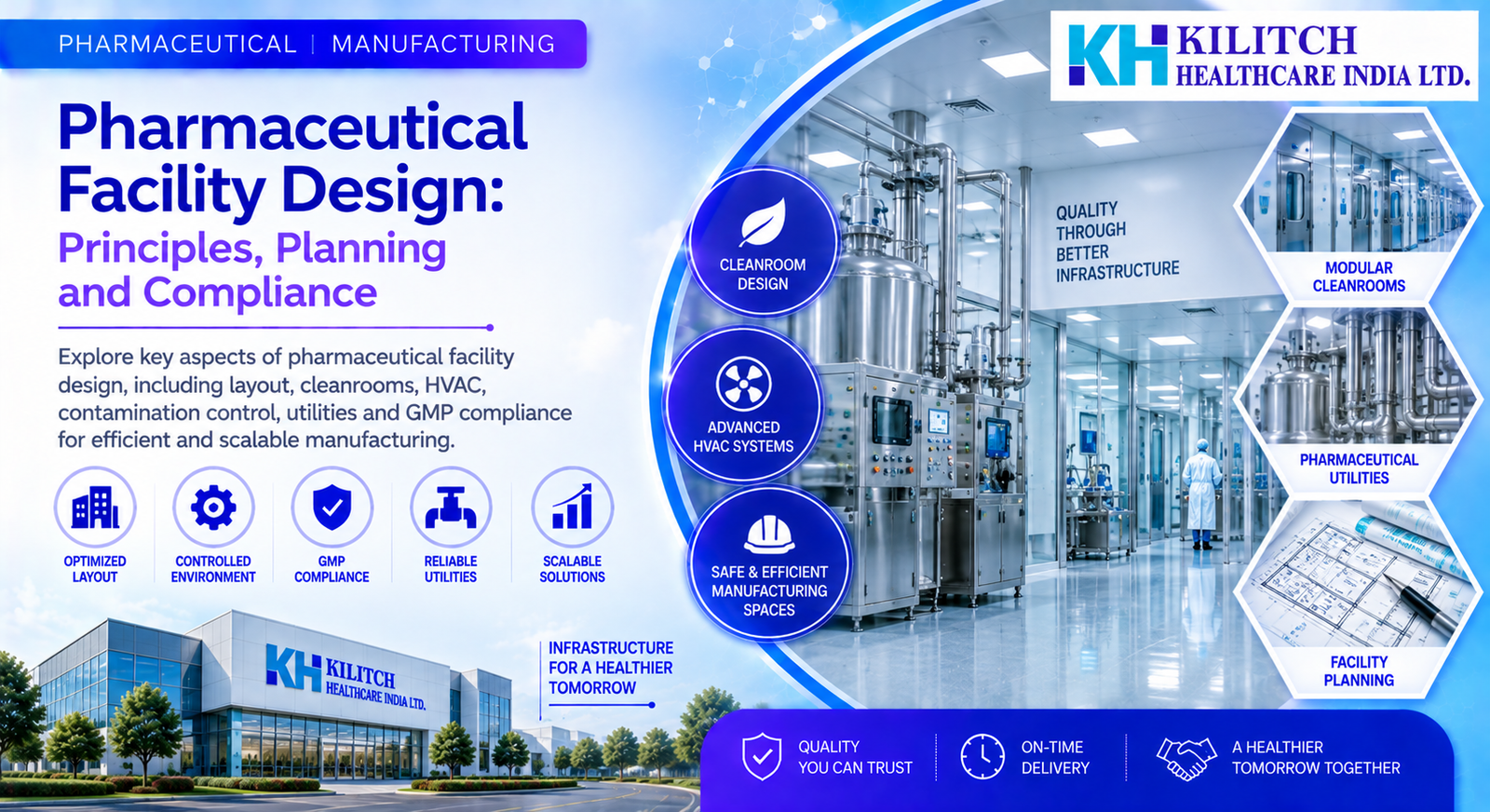
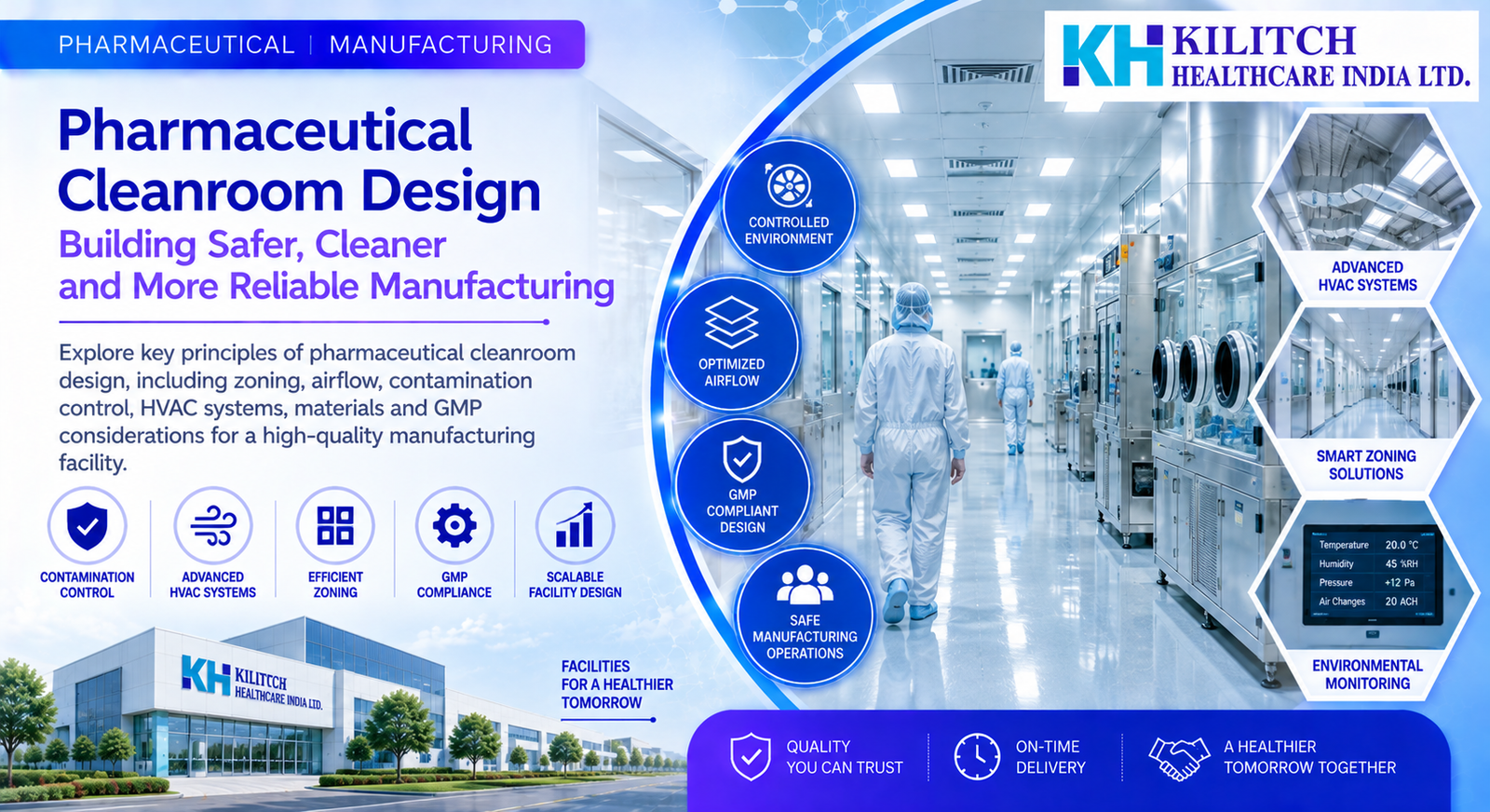
All sterile ophthalmic manufacturing takes place in classified cleanrooms — environments where airborne particles, temperature, humidity, and pressure differentials are rigorously controlled. The ISO 5 / Grade A environment (the strictest classification) is used for the actual filling operation. ISO 7 / Grade C areas are used for preparation and compounding. HVAC systems maintain laminar airflow, and continuous environmental monitoring tracks viable and non-viable particles.
Step 3: Sterilization
Sterilization is the most critical step in ophthalmic manufacturing. Two primary methods are used. Terminal Sterilization involves sterilizing the product after filling — typically by moist heat (autoclaving) or filtration + gamma irradiation. It provides the highest sterility assurance level. Aseptic Processing is used when the product cannot withstand heat sterilization. The drug solution is sterile-filtered (0.22 micron), and all components are sterilized separately before being assembled in the cleanroom. This method demands the highest level of operator training and environmental control.
Step 4: Filling & Sealing
Automated filling lines precisely dose the sterile formulation into pre-sterilized containers — multi-dose bottles, unit-dose vials, ampoules, or prefilled syringes. Filling is performed under Grade A laminar airflow conditions. Automated vision inspection systems check each container for fill volume accuracy, particulate contamination, and container integrity before sealing.
Step 5: Quality Control & Batch Release
No batch leaves the facility without passing a comprehensive quality control protocol. Key tests include sterility testing (per pharmacopoeial standards), pH and osmolarity verification, sub-visible and visible particulate matter analysis, container closure integrity testing (CCIT), preservative efficacy testing (for multi-dose products), microbial endotoxin / pyrogen testing, and stability studies to confirm shelf-life under real and accelerated conditions.
Kilitch Healthcare’s Edge — Where Technology Meets Vision
Kilitch Healthcare doesn’t just manufacture ophthalmic products — we engineer solutions that address unmet clinical needs. Through our Eyekare Division and our Innovations pipeline, we have integrated some of the world’s most advanced ophthalmic technologies into our manufacturing capabilities.
► Novelia Pure Flow Technology
A pioneering French technology, introduced in India for the first time by Eyekare in 2014, the Novelia system is a multi-dose closing tip that prevents bacterial contamination without the need for preservatives. It has received approval for prescription and OTC ophthalmic products in markets worldwide. For patients with preservative sensitivity — a growing clinical concern — this technology is transformative.
► 3K Triple Protection System
The world’s only patented metered-dose preservative-free delivery system, originally developed in Germany, the 3K system is designed for the precise, contamination-free delivery of glaucoma and dry eye medications. It has received FDA approval, opening doors to the US and other regulated markets. Its triple protection mechanism ensures microbiological safety while delivering accurate, consistent dosing.
► VH2O2 Blister Technology
India’s first blister packaging sterilized using Vapour Hydrogen Peroxide (VH2O2), this technology ensures the sterility of the immediate product-contact surface — eliminating the risks associated with traditional, unsterilized blisters. Validated and internationally recognized, this innovation is now part of a select group of European-grade sterile packaging solutions.
► Gel Drop Technology
Traditional ophthalmic ointments, while effective, are difficult to administer and can blur vision. Kilitch’s proprietary Gel Drop Technology bridges the gap between drops and ointments — offering the viscosity and retention of ointment with the convenience of a drop format. Available in viscosity ranges from 80 to 2,000 cPs, these formulations can be used for both day and night application.
► Next-Generation Sterile Swab Applicator
The only TRU Sterile Swab-stick Applicator available in Asia. These Ready-to-Use (RTU) sterile swab sticks are individually packed, eliminating the need for on-site preparation by practitioners. This reduces the risk of contamination, saves time, and enhances consistency of application — a genuine advancement in ophthalmic surgical preparation.
► Triamcinolone Injection (OT-Friendly Pack)
India’s first USP-compliant Triamcinolone injection packed in an operating theatre-friendly configuration — complete with alcohol swab, 1mL syringe, and 24G and 30G needles in a single sterile pack. Widely used for retinal inflammation, chalazion, uveitis, and vitrectomy, this product reflects Kilitch’s ability to innovate at the intersection of clinical convenience and manufacturing excellence.
Challenges in Sterile Ophthalmic Manufacturing — And How to Overcome Them
Sterile ophthalmic manufacturing is as demanding as it is critical. Manufacturers face a unique combination of technical, regulatory, and operational challenges — many of which require years of experience and specialized infrastructure to navigate effectively.
Going Preservative-Free
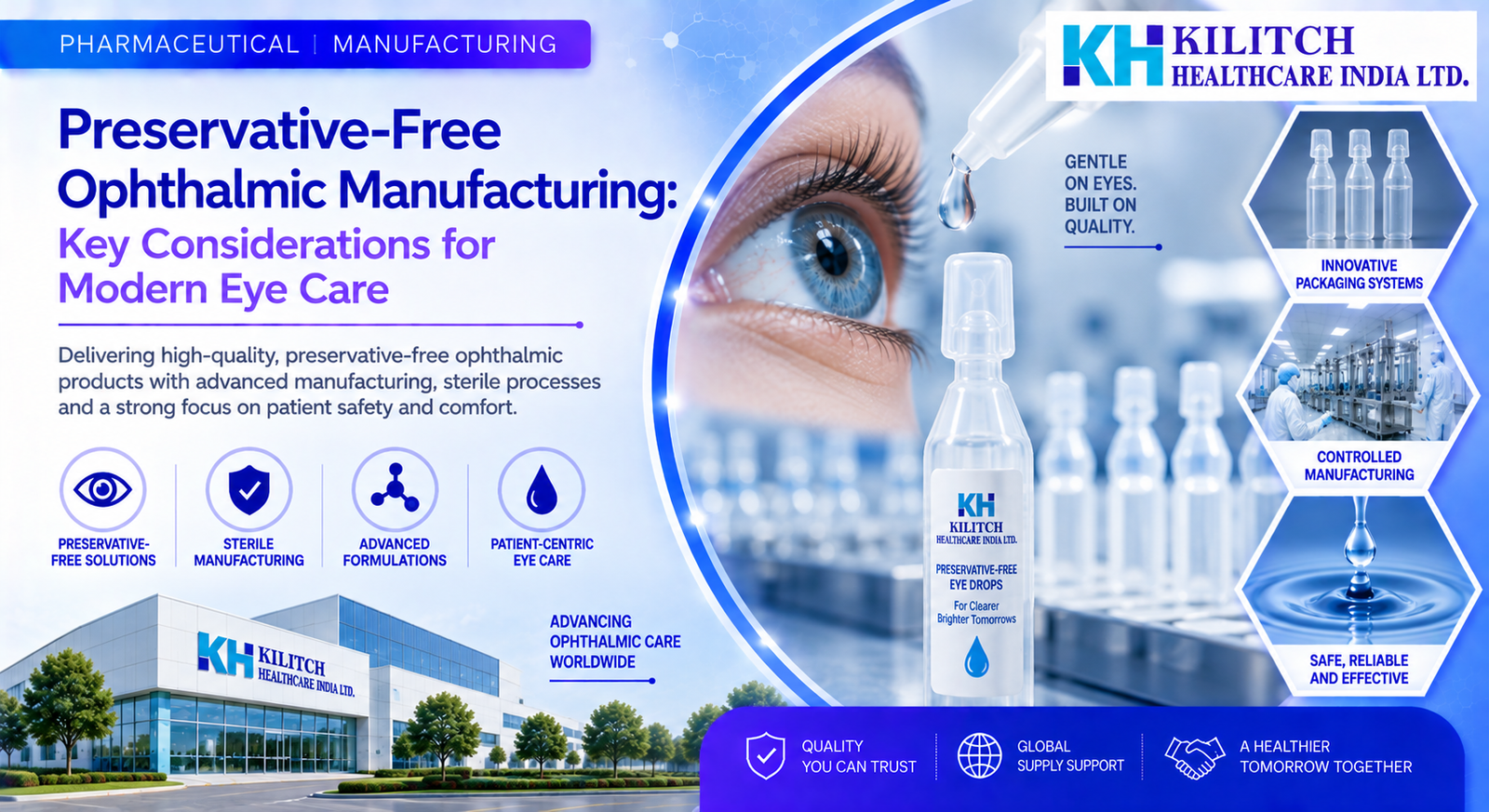
Consumer and clinician demand for preservative-free (PF) formulations is growing rapidly, driven by increasing awareness of preservative-related ocular surface toxicity. However, PF manufacturing is significantly more complex — it requires either unit-dose primary packaging or specialized multi-dose systems (like Novelia or 3K) that prevent contamination without chemical preservatives. Kilitch has invested in both, giving our clients the flexibility to offer PF products across a range of formats.
Scale-Up from R&D to Commercial Batch
A formulation that performs beautifully at the lab scale can behave very differently at commercial volumes. Ophthalmic formulations — particularly suspensions and viscous gels — are especially sensitive to mixing dynamics, shear forces, and filling speed. Kilitch’s in-house R&D team of 50+ scientists works in close coordination with manufacturing to ensure seamless tech transfer and scale-up.
Multi-Market Regulatory Complexity
Manufacturers targeting regulated markets (US FDA, EU, UK MHRA, Australia TGA) must navigate significantly more demanding compliance requirements than those serving domestic markets alone. Kilitch’s accreditations and track record across multiple regulatory zones position us as a trusted partner for global launches.
Container Closure Integrity (CCI)
For injectable ophthalmic products, maintaining the sterile barrier throughout the product’s shelf-life is paramount. CCI testing — using techniques like vacuum decay, headspace analysis, and dye ingress — is mandatory. Kilitch’s quality systems incorporate validated CCI testing protocols for all sterile ophthalmic parenteral products.
Supply Chain Integrity
Sterile-grade excipients, container components, and packaging materials must themselves meet stringent quality standards. Any contamination introduced through raw materials or packaging can compromise the entire batch. Kilitch maintains a qualified supplier network with rigorous incoming quality controls.
Why Partner with a Specialist CDMO for Ophthalmic Products?
With the global ophthalmic contract development and manufacturing (CDMO) market expanding rapidly, many pharmaceutical companies are choosing to outsource their ophthalmic product development and manufacturing to specialists. But not all CDMOs are equal — and in sterile ophthalmic manufacturing, the difference between a specialist and a generalist can mean the difference between product success and costly failure.
The Risk of Non-Specialist Manufacturing
General pharmaceutical manufacturers may not have the specialized cleanroom infrastructure required for aseptic ophthalmic fill-finish. They may lack experience with the specific container closure systems used in ophthalmology (multi-dose bottles, eye drop tips, PFS). They may not have validated methods for the unique quality control tests that ophthalmic products require. And critically, they may not have the regulatory track record needed for approval in target markets.
The Kilitch Advantage as a CDMO Partner
- Dedicated ophthalmic manufacturing infrastructure — purpose-built cleanrooms, specialized filling lines, ophthalmic-specific QC capabilities.
- Full-service CDMO offering — from formulation development and clinical batch manufacturing through to commercial-scale production and regulatory support.
- Technology differentiation — proprietary and licensed technologies (Novelia, 3K, VH2O2, Gel Drop) that give our clients a competitive edge.
- Private label expertise — Kilitch is a preferred OEM manufacturer for leading global MNCs, with extensive experience in white-label and private label ophthalmic production.
- Regulatory readiness — accreditations and compliance with WHO-GMP, Schedule M, and preparation for regulated market submissions.
- Global reach with Indian manufacturing economics — world-class quality at competitive cost, delivered from one of India’s most advanced pharmaceutical facilities (3,50,000 sq. ft.).
- Experienced team — 50+ R&D scientists and decades of accumulated formulation know-how.
Conclusion: Zero Compromise, Total Precision
Sterile ophthalmic manufacturing operates in a space where perfection is not the goal — it is the baseline. Every product that comes off a sterile ophthalmic production line will be placed into someone’s eye, sometimes injected millimetres from the macula. The margin for error is zero.
At Kilitch Healthcare, we understand this responsibility profoundly. Our investment in world-class infrastructure, our passion for innovation, our commitment to regulatory excellence, and our deep clinical understanding of the eye have positioned us as one of India’s leading sterile ophthalmic manufacturers — and a trusted CDMO partner for global pharmaceutical companies.
Whether you are developing a new ophthalmic product from scratch, looking for a manufacturing partner for an existing formulation, or seeking to enter new markets with a private label ophthalmic portfolio — Kilitch Healthcare is ready to partner with you.
| Ready to Partner With a World-Class Ophthalmic Manufacturer? Speak with our team today about your ophthalmic product development and manufacturing needs. Contact Us: info@kilitchhealthcare.com | +91-22-6137 2222 | kilitchhealthcare.com/contact-us |